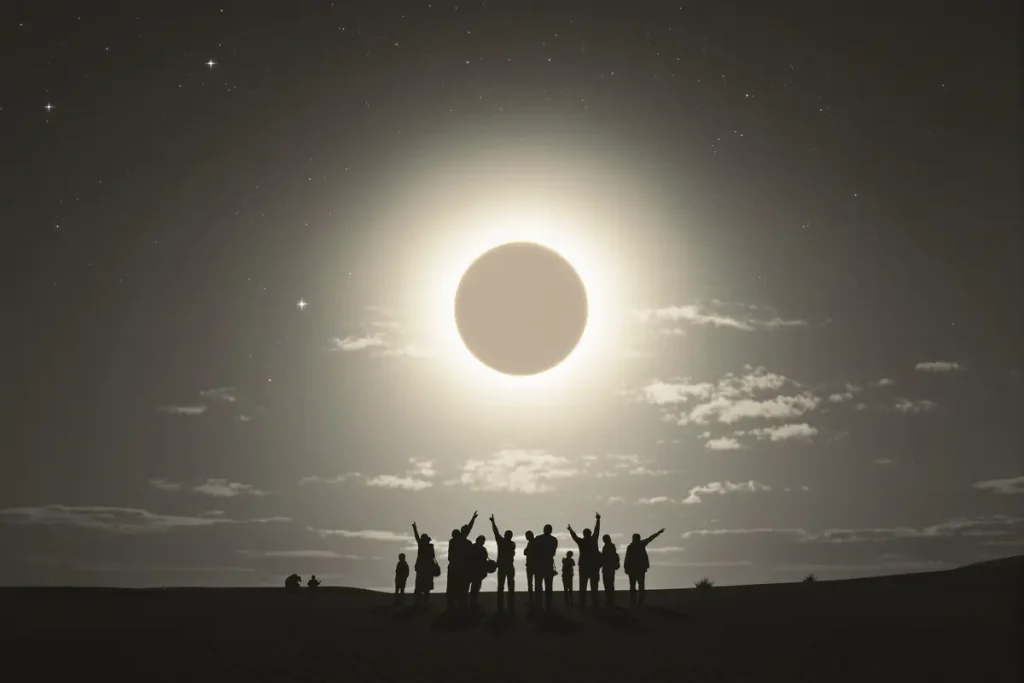
The sun will vanish in the middle of the day. The sky will go dark in places where it’s usually blazing with light. On August 2, 2027, millions of people will witness something rare and unforgettable — the longest total solar eclipse of the 21st century. And it’s already stirring up emotions, theories, and debates across the globe.
Six Minutes of Darkness: What Makes This Eclipse So Special?
Most total solar eclipses last just two or three minutes. But this one will stretch for six minutes and twenty-three seconds at its peak — a cosmic record for the century. It’ll happen as the Moon casts its shadow across the Earth, blocking sunlight on a long path from the Atlantic Ocean, through North Africa and the Middle East, and into parts of Asia.
Why so long? It comes down to three simple things:
- The Moon will be closer to Earth than usual, so it looks larger in the sky.
- The eclipse path passes near the equator, where Earth spins fastest.
- The alignment between Earth, Moon, and Sun will be nearly perfect.
That rare combo gives Earth a few extra minutes of eerie twilight in the middle of the day.
What You’ll See — And Feel — During the Eclipse
It starts slow. About an hour before totality, a small bite appears on the edge of the sun. The air feels different. Light seems colder. Shadows sharpen and colors fade. Then, in the final few moments before totality, the world feels on edge. Birds go quiet. The air chills. People look up… and then it happens.
The sun disappears. What remains is a black disc ringed by a glowing white halo — the solar corona. Stars twinkle. Streetlights flicker on. People gasp, cheer, or fall silent. It’s not just beautiful — it’s strange in a way that hits deep. Because in those six minutes, day has turned into night.
The Real Risks: Not Cosmic, But Human
This eclipse won’t damage the Earth. But your reaction — and the crowd around you — might lead to danger if you’re unprepared. Here’s what experts are really concerned about:
- Eye damage from looking at the sun without protection during partial phases
- Confused drivers slamming on brakes during sudden darkness
- Kids and pets reacting in fear
- People panicking because of myths, conspiracies, or just pure surprise
Technically, sensors might glitch and a few solar panels may drop offline briefly. But the real issue is how we respond to the weirdness. Some scientists are pushing calm, clear communication. Others say we shouldn’t ignore the emotions — like fear — that come with such a surreal event.
How to Watch the Eclipse Safely and Meaningfully
Planning ahead can make the experience both safer and deeper. Here’s a simple way to prepare:
- Get certified eclipse glasses — the only thing you truly need
- Check if you’re in the path of totality. That’s where the full blackout happens
- Pick a safe place to watch, like an open field or rooftop
- Plan ahead emotionally: will you film it? Will you sit in silence? Guide a child?
Experts suggest a three-step method for viewing:
- During the partial phase, use eclipse glasses to check the sun now and then.
- During full totality ONLY, glasses off — enjoy the corona with the naked eye.
- When the first sliver of sunlight returns, glasses back on.
And that’s it. No gear, no rush. Just be still, be ready, and be present.
Why So Much Fuss Over a Few Minutes?
Some call it a miracle. Some call it a sign. Many just call it science. But for something that’s entirely predictable and well understood, this eclipse has sparked an unusual wave of emotion. Some worry about power outages. Others wonder about global symbolism. Online, conspiracy theories are already multiplying.
But here’s a gentler truth: eclipses connect us — not to fear, but to wonder. They remind us how small we are, how precise the universe can be, and how rich the sky still is with surprises.
Mark Your Calendar, Prep Your Mind
| Key Detail | Info | Why It Matters |
|---|---|---|
| Date & Duration | August 2, 2027 — up to 6 mins 23 secs of totality | The longest full eclipse this century |
| Path | Atlantic → North Africa → Middle East → Asia | Check if you’ll be in the shadow or nearby |
| Main Risks | Panic, poor planning, unprotected viewing | Stay safe and calm, not careless or reactive |
A Rare Shadow With a Human Legacy
Years from now, scientists will write about the numbers. But you’ll remember something else — maybe the silence of birds, or the chill in your skin, or the awe on a child’s face. Maybe just the strangeness of seeing the day paused like a skipped heartbeat.
This eclipse is about more than data. It’s about human stories. Some will post shaky phone videos. Some will quietly cry. Others will just stare up, realizing that even in an age of Wi-Fi and satellites, the sun and moon can still steal the script for a few minutes.
The sky will go dark at noon. How you watch it — quietly, curiously, or with wide-eyed wonder — is up to you.