Past 70, staying strong and steady isn’t just about walking more or hitting the gym. In fact, one overlooked movement might be even more powerful for keeping you independent, mobile, and thriving into your 80s and beyond. It’s not flashy. It’s not intense. But it could quietly change everything about how you age.
Why Walking and Gym Sessions May Not Be Enough After 70
Daily walks are great for your heart and mood. Gym workouts can build muscles. But for many adults over 70, those efforts don’t seem to stop the slow shrinking of strength and confidence.
People still struggle to stand from the sofa without help or step off a curb without fear. That’s because walking and machines don’t train the movements we need most in everyday life—like standing up, crouching down, or turning safely.
Your body slowly loses what you don’t use. If you stop bending, reaching, and lowering yourself, your joints and nervous system give up those skills.
The Secret Movement Pattern of the Long-Lived
Look at two neighbors in their late 70s. One walks briskly every morning. The other gardens, plays on the floor with grandkids, and kneels to pet the dog. The second one looks “less active” on paper… but often ends up more capable in real life.
The difference? The second person keeps their body familiar with a key pattern: moving down to the ground, then back up again.
Studies show that this simple movement pattern strongly predicts longevity and quality of life. In one Brazilian study, adults over 70 who could sit and rise from the floor without using hands had a much lower risk of early death—even when researchers adjusted for age and health.
Why Ground-to-Stand Beats Another Gym Session
Walking trains a straight, small motion. Gym machines often lock your body into artificial paths. But real life is unpredictable. You bend, rotate, stabilize, catch yourself, reach awkwardly. And when something unexpected happens—like a stumble—you need your body to respond with coordination and confidence.
Ground-to-stand practice activates everything at once:
- Core strength
- Hip and knee mobility
- Ankle stability
- Balance and reaction time
- Brain-body coordination
Unlike machines, it prepares your body for real-life challenges. And it reminds your nervous system, “We still move this way.”
How to Start Ground-to-Stand the Right Way
You don’t need to touch the floor right away. You don’t need perfect form. And you definitely don’t need to prove anything. What matters is frequency—small, safe movements done often.
Beginner Step: Chair Stands
- Use a sturdy chair. Sit, then stand using as little hand support as possible.
- Start with 3–5 reps a day.
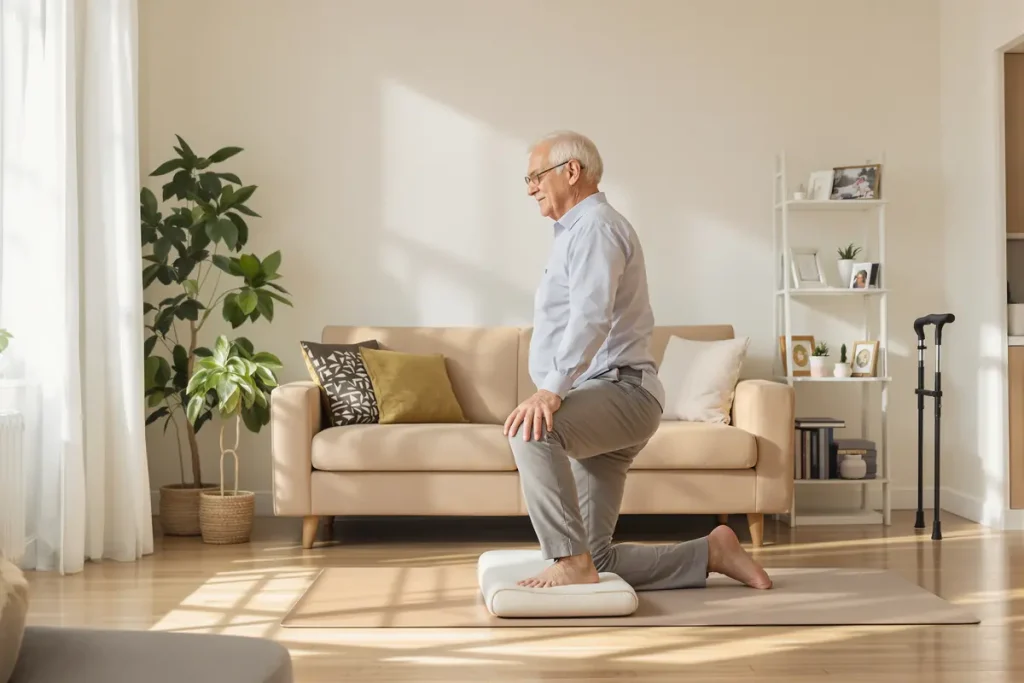
Add a Half-Kneel
- With a cushion and wall support, kneel one knee down, then return to standing.
- Do this 2–3 reps on each side a few times a week.
Go All the Way (If Ready)
- Start from standing. Lower one knee, then both, using a chair or table as needed.
- Sit or kneel on a cushion. Take one breath.
- Then stand again with control.
- Just 1 minute a day is enough!
If you’re worried about falling, practice near a soft couch or with help. Use supports shamelessly—railings, a friend, even the wall. The goal isn’t heroics, it’s comfort, control, and consistency.
Create a Movement-Friendly Home
Many older adults adjust their homes to avoid bending. Beds and chairs get higher. Shoes stay on upper shelves. It makes sense for sore knees—but it also removes the very movements that keep us capable.
Instead, try weaving in small challenges:
- Use a slightly lower chair once a day
- Place a cushion on the floor and sit briefly before standing
- Touch the ground when picking something up, then rise smoothly
These micro-movements keep the body alert and responsive. They signal: “We’re still using this range.”
A Sample Weekly “Movement Menu”
- Once a day: 3–5 standing-up reps from a chair with light or no hand support
- Three times a week: 2–3 kneels on each leg using supports
- Once a week: Get to the ground and back up with help, sit or kneel for 30–60 seconds
This isn’t a workout plan. It’s a daily nudge toward your best possible future.
Why It All Matters
The most active, independent 80- and 90-year-olds often share one habit: they never stopped getting down and back up.
Sometimes it’s gardening. Sometimes it’s prayer or play. But always, they kept the ground-to-stand door open, even just a little, every day.
You can do the same. Don’t aim for perfect. Aim for regular. Every time you rise with control, you’re building a stronger, safer version of yourself—one that moves with ease, even decades from now.