What if the easiest way to refresh your home didn’t come from a spray can, but from your kitchen scraps? A growing number of people are turning to a surprising mix—boiling lemon peel, cinnamon sticks, and fresh ginger—for a naturally clean scent that’s as comforting as it is effective. And the best part? It’s simple, low-cost, and surprisingly powerful.
Why this strange trio is trending now
This method isn’t new. People in Latin America and the Mediterranean have been simmering citrus and spices for generations. But today, thanks to social media, especially TikTok and Instagram, this old-school trick has gone viral. One quick video showing a simmering pot of water, lemon peel, cinnamon, and ginger can pull in millions of views.
Why? It’s low-tech—but feels luxurious. It repurposes kitchen leftovers, like lemon peel, that would otherwise hit the trash. And it uses everyday ingredients already sitting on your shelves. You simply boil them gently, and the natural steam fills your home with a clean, layered fragrance.
How lemon, cinnamon and ginger work together
This isn’t just about scent—it’s about sensory harmony. Each ingredient adds a unique tone, creating a fragrance that feels both clean and cozy at once.
- Lemon peel: It’s bright and fresh, packed with limonene—the compound behind the classic “clean” smell. It cuts through heavy cooking odors fast.
- Cinnamon: Adds warmth and softness. It balances lemon’s sharpness with comforting, bakery-style warmth—without any sugar.
- Ginger: Brings a spicy, peppery lift that keeps the mix from smelling too sweet or predictable. It also helps the scent spread further.
The result? A scent that starts sharp, warms into something cozy, and leaves a little spice on the tail end.
How to make your own simmering blend
Ready to try it? You don’t need anything fancy. Just follow this stovetop method:
- 3 to 4 cups of water
- Peel of 1 lemon (washed, ideally unwaxed)
- 1 cinnamon stick
- 3 to 4 slices of fresh ginger
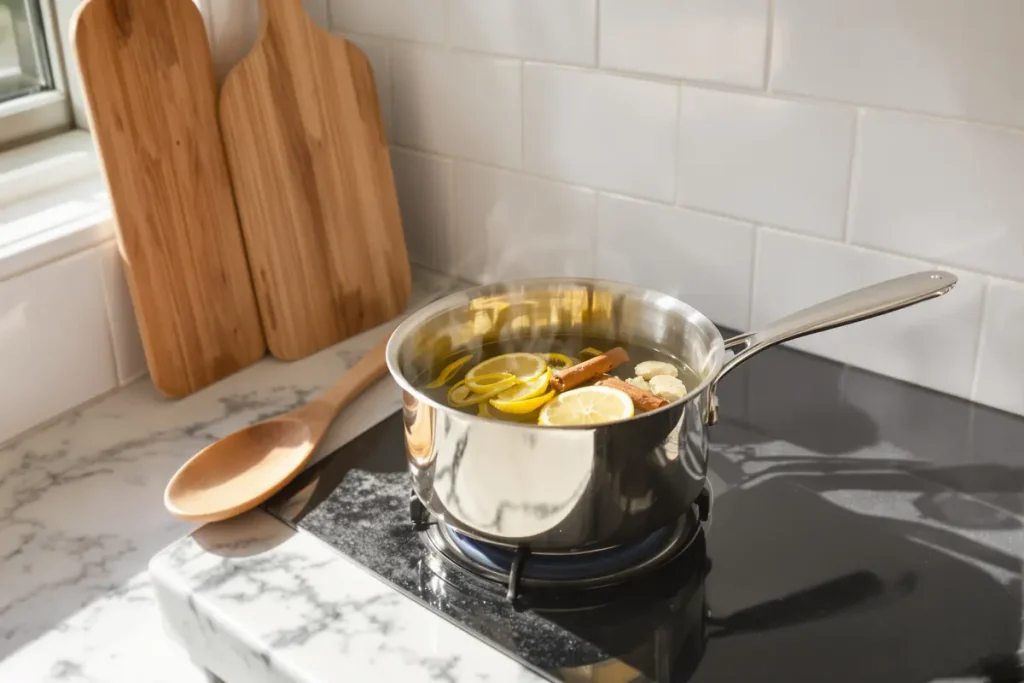
Bring everything to a boil in a small pot. Then reduce the heat to low and let it simmer gently. Add more water as it evaporates to prevent burning.
This works beautifully after cooking to clear the air of frying or fish odors. Or try it in cramped spaces like flats or stairwells, where air circulation might be limited.
Other ways to simmer—hands-free options
If you don’t want to babysit a stovetop, you’ve got alternatives:
| Method | Pros | Points to Watch |
|---|---|---|
| Stovetop | Quick, no new tools needed | Must monitor closely to avoid boiling dry |
| Slow cooker | Long-lasting, easy to manage | Takes more space and power |
| Electric simmer plate | Steady low heat, safer than the stove | Extra appliance, not ideal near pets or kids |
Does it actually clean the air?
Not quite. While this blend freshens and masks bad smells, it doesn’t remove pollutants, dust, or mold. According to air quality experts, steam spreads scent molecules—it doesn’t suck up harmful particles.
That said, a home that smells pleasant can encourage better daily routines. People might cook more, clean more often, or even skip artificial sprays. Think of this as an add-on, not a replacement for ventilation, cleaning, or air purifiers.
Is it safe for everyone?
Even natural solutions need a dose of caution. Here’s what to watch out for:
- Never leave it unattended on the stove.
- Turn pot handles inward to prevent tipping.
- Use smaller amounts in homes with asthma or fragrance sensitivity.
- Crack a window to avoid too much steam build-up.
And don’t forget your pets—cats and dogs are far more sensitive to smells. Make sure they can leave the room if the scent bothers them.
Why “natural” doesn’t always mean harmless
Part of this trend stems from distrust of synthetic air fresheners. Many of those contain volatile compounds that stick around far longer than the scent itself.
But even natural oils from citrus or spices can be irritating in small, enclosed spaces. If you deal with frequent headaches or reactions to scented candles, try this simmering blend in a smaller batch first—for just 15 to 20 minutes—and see how you feel.
Other smart ways to use these ingredients
Don’t limit lemon, ginger and cinnamon to the stovetop. They can also shine in:
- Herbal infusions: Add slices to hot water with honey for a soothing, caffeine-free tea.
- DIY cleaners: Soak lemon peels in vinegar for a week to make a gentle surface cleaner.
- Trash fresheners: Sprinkle cinnamon in your bin bag to block odors.
These uses remind us that simple ingredients often pull double-duty: scent, flavor, and function—all without constant chemicals.
A small trick with big meaning
In the end, the boiling pot of peel, spice, and root is more than a fad. It’s a quiet rebellion against overpowering sprays, plastic plug-ins, and artificially scented solutions. It’s a signal: people want their homes to smell clean and feel human, using less and choosing wisely.
So next time you slice a lemon, maybe don’t toss the peel. Drop it in water with a cinnamon stick and some ginger. Then, take a breath. You just gave your home a fresh feel—naturally.