Feeling boxed in by a tiny living room? You’re not alone. Many small spaces can feel closed off or cluttered, no matter how clean they are. But decorators have a favorite trick that instantly opens up even the most cramped room—without tearing down walls or tossing out furniture. It all starts with one smart illusion.
The decorator secret: one wall can change everything
Interior designers often rely on visual illusions to make rooms feel bigger than they really are. One of the most powerful? Turning a single wall into a “lengthening wall.” This simple move shifts how your eyes read the space, creating a feeling of openness and flow.
This isn’t about painting a bold feature wall or hanging a giant mirror. It’s about guiding your gaze so the room seems to stretch, breathe and feel calmer. Your walls stay the same—but your perception changes completely.
How the “lengthening wall” illusion works
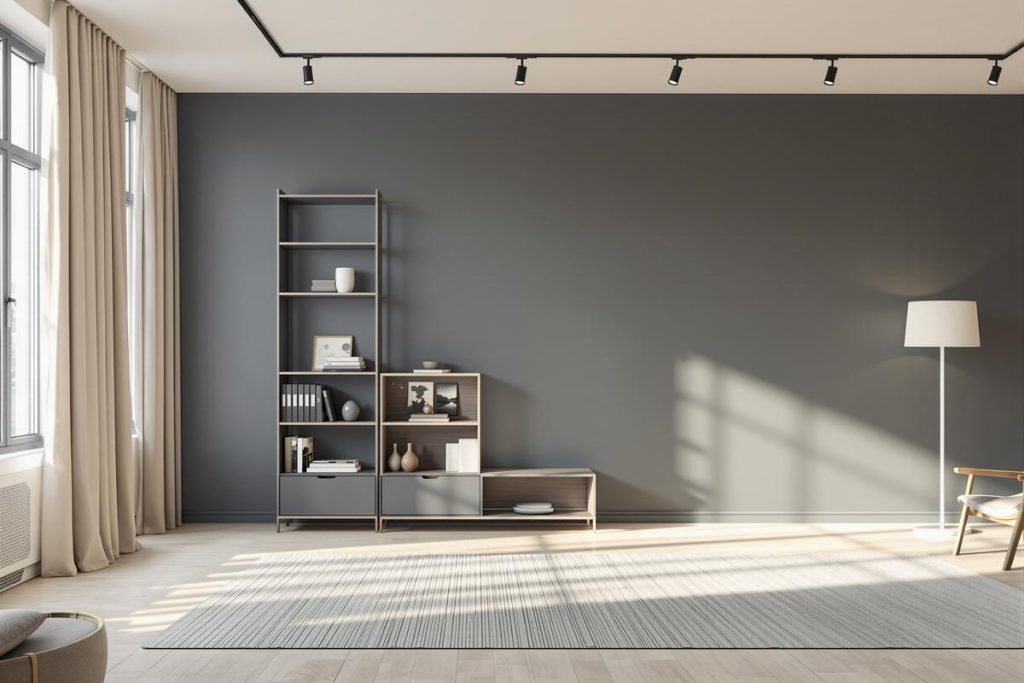
The idea is to transform the longest uninterrupted wall in the room into a subtle visual anchor. Designers build this effect using three layers:
1. Use color to deepen the room
- Choose a tone that’s slightly deeper or cooler than other walls.
- Go for soft, calm colors like muted green, smoky blue-grey, or warm taupe.
- Avoid dramatic contrast—this isn’t about drama, but about quiet depth.
This creates what designers call a gentle gradient. The wall feels further away, and corners blur. Your eye naturally travels farther, tricking your brain into seeing more space.
2. Add vertical elements to “raise” the ceiling
- Install floor-to-ceiling bookcases or shelving painted in the same color as the wall.
- Use tall lamps instead of short table lights.
- Hang artwork in vertical arrangements instead of wide layouts.
- Consider slim wall panels or battens that draw the eye upward.
These lines create an up-and-down rhythm that makes the room feel taller and more expansive.
3. Let light run along the wall
- Use light sources that stretch along the wall’s length, like sconces or ceiling track lights.
- Avoid harsh ceiling pendants that shine straight down.
- Scatter soft lighting at different heights to blur the boundaries.
This creates a calm, even glow that enhances depth and softens edges.
Adapting the trick to real-life spaces
Most rooms aren’t perfect rectangles. But this technique still works—with just a few adjustments.
Open-plan rooms
If your living area blends into a kitchen or dining space, choose a wall that runs through both zones. Keep color and design consistent all the way across. This connects the spaces and softens transitions.
Long, narrow rooms
In “corridor” rooms, the space already feels stretched. To soften that feeling:
- Still treat the long wall, but place a coffee table or rug crosswise to slow that line.
- Add low furniture that gently interrupts the length without blocking the flow.
Rooms with large windows
If one side of the room is all glass, like French doors, decorators usually skip painting that wall. Instead, they use the solid opposite wall for the illusion. It draws your gaze inward and balances the view outside.
Common mistakes to avoid
To keep the illusion working, stay away from these design traps:
- Dark colors on the short ends of the room, which make the space feel even smaller
- Bulky entertainment units that block the lengthening wall
- Heavy drapes that cut across and visually lower the ceiling
- Too many clashing colors, which break the calm flow
Instead, keep things light, layered, and unified around that key wall. Even your TV can blend in if it’s framed with shelves or placed off-center.
Boost the effect with subtle extras
Designers often use this wall technique alongside other soft illusions:
- Mirrors: Place a mid-size mirror on or at the end of the long wall to reflect light and extend views.
- Rugs: One large rug that runs in the same direction as the wall stretches the floor visually.
- Ceilings: Paint in a shade just lighter than the walls, or add a subtle tint matching the anchor wall to unify perspective.
How to get started—on any budget
The best part? You don’t need a contractor or expensive tools. Here’s how to create the illusion in just a weekend:
- Pick the longest uninterrupted wall—often the one you look at from the sofa.
- Paint it one or two tones deeper than your surrounding walls.
- Add a tall lamp or bookshelf that reaches near the ceiling.
- Move your lighting so it washes along that wall.
- Pull furniture slightly away from the wall to create breathing space.
If you’re renting, try removable wallpaper, tall narrow curtains in a matching tone, or even peel-and-stick panels. These kinds of additions create the same vertical interest and flow—without changing the wall permanently.
Why designers love this trick
From luxury hotel lobbies to tiny studio apartments, the lengthening wall keeps popping up because it just works. It brings balance, calm, and spaciousness to tight layouts. It hides awkward angles. And on a deeper level, it eases the stress that messy or crowded rooms can build up.
If you’re updating your living room, this one-wall focus can help guide all your future decisions—where to place shelves, how to choose colors, even how to set up the furniture.
Sometimes, all it takes is one small change to make a big impact. Treat that longest wall like the anchor it truly is—and let the illusion do the rest.