It started with silence. No fanfare, no breaking news headlines—just the sight of orcas surfacing near melting ice shelves in Greenland, where thick ice once ruled untouched. What followed wasn’t wonder. It was worry.
Orcas are entering new waters—and changing the Arctic story
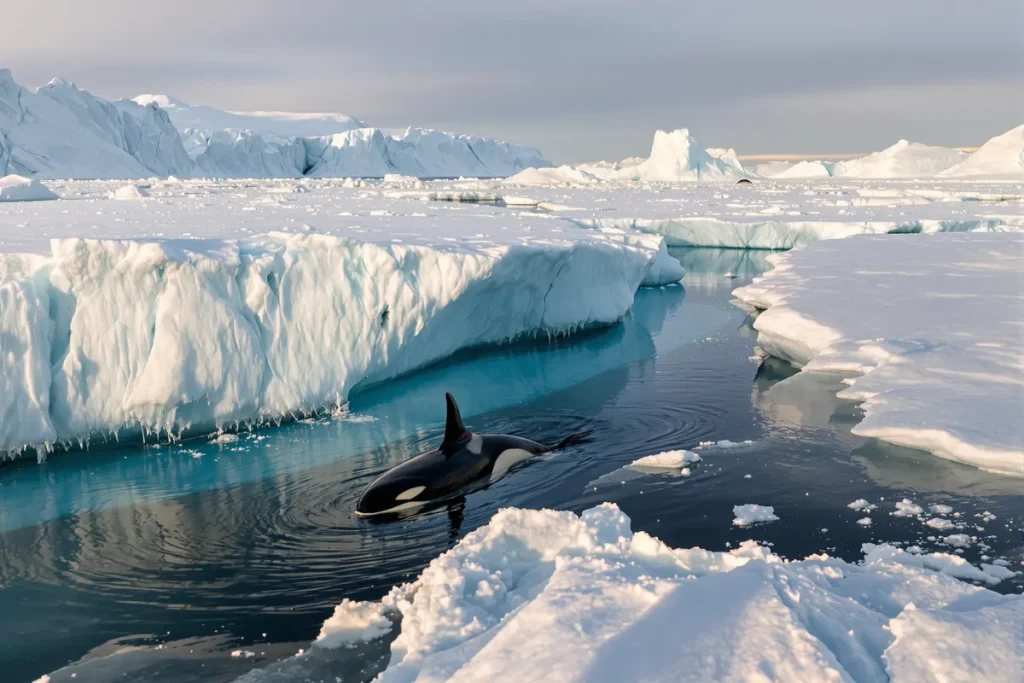
Orcas are no strangers to the waters around Greenland, but this moment felt different. These apex predators cruised right next to a fragile, thinning ice shelf that used to be too frozen for them to reach. Just five years ago, their presence near that exact location would’ve been impossible.
Scientists aboard a research ship spotted an orca pod moving through meltwater, surfacing near jagged cracks and glowing turquoise pools. One slipped so close beneath a fractured ledge that a massive slab of ice broke off behind her. She barely reacted, calmly rolling toward the researchers with her eye above water—watching them, perhaps. That haunting moment ended up in Greenland’s emergency report later that night.
The tone of the alert? Calm but serious. “Unusual predator activity.” “Accelerated melt.” “Heightened alert.” Behind those measured words was one alarming truth: the Arctic’s timetable was breaking down, fast.
Why orca sightings signal a deeper emergency
This isn’t just about the animals. Orcas are top hunters, and their new presence so far inland tells experts that something fundamental is shifting. For centuries, thick sea ice created natural barriers, separating ecosystems and protecting vulnerable species like seals, narwhals, and seabirds.
Now those barriers are falling away. The ice that used to stretch solidly from shore now melts deeper into fall. Winter is arriving late—and weak. That gives orcas more time and space to push in, learning new hunting grounds and teaching other pods to follow. Once they know a place offers easy prey, they return. Again and again.
Researchers comparing satellite images from a decade ago saw a dramatic change. The edges of the ice shelves have retreated by dozens of meters. These same areas once helped local hunters travel safely and find food. Now, that safety is gone.
The emergency on land: people and traditions at risk
In small villages along the coast, locals are facing more than strange sightings. They’re watching a way of life erode under their feet. A hunter named Aputsiaq, north of Disko Bay, said the sea “sounds different now.” Thick, silent ice has been replaced by constant cracking. Danger now whispers from below.
He’s seen orcas near his seal hunting spots—three times in one week. That used to be unheard of. For Arctic communities, the emergency isn’t a blurry graph. It’s a shorter hunting season, unstable ice paths, and a quiet fear of what might be beneath them on the next journey.
How science and community are working together
Rather than panic, Greenland teams turned to action. First, they listened—literally. They dropped hydrophones into the cold waters to record whale calls. Then, they launched drones to map ice fractures and monitor whale paths in real-time. Locals also began logging sightings in a shared app, giving scientists eyes across the region.
The result? A fast-developing network that detects shifts before they become disasters. And it’s not just data. It’s a way to reclaim control during a time when nature’s rules seem to be rearranging themselves.
What you can actually do—yes, even from far away
This might sound like a far-off Arctic issue. But it’s not. The same habits that help communities in Greenland can be applied almost anywhere: pay attention to local patterns. Trust your memory of what’s normal with seasons, species, or snow. And when something feels off—report it, share it, talk about it.
Here’s how you can join the response:
- Join citizen science projects related to weather, wildlife, or migration.
- Support organisations that work directly with Arctic communities and researchers.
- Share verified stories and data instead of viral clips without context.
- Stay involved in climate policy discussions, even at the local level. It matters.
One scientist said it plainly: “We’re not scared of the orcas. We sounded the alarm because the ice is vanishing faster than we ever expected.” In those receding edges, the Arctic is sending a message.
Preparing for the next season—before it’s too late
Orcas will be back. That part’s nearly certain. What’s unknown is what else awaits them—and us—when they return. Will their hunting grounds be ice or open water? Shelters for seals or bare blue pools offering no cover?
The stories of climate change often feel massive, abstract. But in Greenland, and in your own backyard, they become specific: a delayed frost, a missing bird, a rise in wildfires. These might feel small on their own. Together, they’re building a future we can still influence—if we choose to notice.