Say goodbye to that clunky kitchen island. In 2026, the smartest homes are ditching the heavy centerpiece in favor of sleeker, space-saving designs that move with your lifestyle. The future of cooking, chatting, and living in your kitchen starts by clearing the center—literally.
Why kitchen islands are falling out of favor
For years, kitchen islands were the heart of modern design. But more and more, they’ve become obstacles instead of assets. That block in the middle? It’s not always helpful. Sure, it looks great in photos. But when you’re trying to cook dinner, unpack groceries, and help with homework—all at the same time—the island becomes more barrier than bonus.
Today’s kitchens serve more than one purpose. They’re *offices*, *playrooms*, *mediators of morning chaos*. And islands, big and fixed, just don’t keep up. People want flow. Flexibility. Kitchens that can change throughout the day.
The rise of modular storage
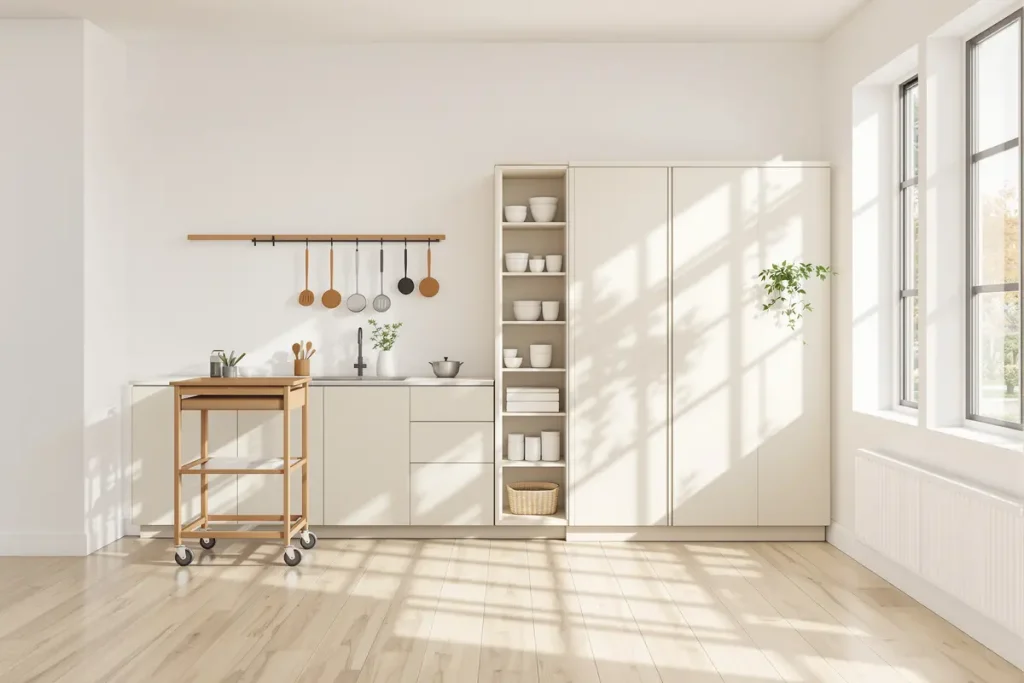
Instead of one bulky piece planted in the center, the latest kitchen trend is all about modular storage. These are slim, movable pieces that hug the walls, slide where they’re needed, and disappear when you need space.
Think narrow carts, shallow tall cupboards, and wall-mounted rails that store utensils, spices, and even plants. It’s smart design that frees up the center for real life: playing, dancing, hosting, or just breathing.
Real-life examples make it clear
- In London, one designer rolls a sleek oak trolley into place for cooking, then clicks it into a wall track when guests arrive.
- In Copenhagen, a family split their island into three mobile parts: a prep station, storage wall, and a bench with drawers. Suddenly, dinner parties were easier, and kids weren’t in the way.
The secret? They didn’t add more space—they changed how the space moves.
How to bring modular style to your kitchen
You don’t need a full renovation to reimagine your layout. Start by defining your top three kitchen needs. Maybe it’s quick meals, hosting friends, and a quiet coffee corner. Then, choose pieces that support those activities—and can move when they’re not needed.
Top recommended modular items
- One high-quality prep trolley: Look for solid wheels, drawer storage, and a durable top surface.
- Tall, shallow pantry cabinets: Never deeper than your forearm—easy to see and easy to reach.
- Wall rails or hanging systems: Great for tools, mugs, and freeing up your counters.
- A low cabinet with deep drawers: Doubles as seating and storage depending on the moment.
- A “wild card” piece: Make it personal—coffee bar, wine rack, baking station, or homework hub.
Bonus tip: Designers recommend limiting your setup to just 2–3 mobile pieces. Too many can turn “modular” into messy.
What happens when you lose the island?
At first, it feels strange. Like when you move furniture and suddenly the room feels… empty. But that space quickly becomes something better.
Kids can zoom through with snacks. You can roll out a yoga mat without dragging chairs. A wheelchair navigates freely. Or you just pace during a phone call without dodging a corner.
That’s the power of a clear center: it doesn’t just look bigger—it feels better to live in.
Modular kitchens: a smart shift for a busy life
The truth is, people don’t live like showrooms. Most kitchens hold backpacks, coffee cups, shopping bags, and last night’s pizza box. And that’s okay—modular systems are built for real life, not perfection.
They let you rearrange your space to match your moment. Set up a buffet, tuck it away after. Roll out a prep station, then lock it back under the counter. Your kitchen stays tidy, flexible, and beautiful—without the backache from those old bar stools.
Rethinking resale and function
Worried about removing an island lowering home value? Don’t be. More buyers today want flow and flexibility over one static piece. Done well, a modular kitchen can feel high-end, precisely because it adjusts to your needs.
In compact apartments, a good trolley and space-saving storage wall can outshine any bulky island. And if everything has a place to park, the room stays clean—not cluttered.
Design your space around your habits
Watch how you move in your kitchen. Where do groceries land when you walk in? Where do you chop veggies or make your lunch? Let those patterns shape your layout instead of copying a design from Instagram.
If you’ve got kids, get their input. Their routes are often unpredictable—and building around them can prevent future chaos.
Conclusion: a softer kitchen revolution
This isn’t just a style trend. It’s a shift in how we live. Modular kitchens aren’t louder, fancier, or flashier—they’re kinder. They flex when life gets messy. They adapt instead of resisting. And in a wobbly world, that flexibility might just be your new favorite luxury.
So even if you keep your island for now, try this: clear the center. Add one cart. Let the space breathe. Just see how it feels. Your body might say what your mind hasn’t yet dared to admit: living without the island just works better.