Vinegar and baking soda might look exciting as they bubble in your drain, but do they really work? More and more people are turning to a quieter, smarter trick that skips the fizz. It’s simple, slow, and surprisingly effective—just a half-glass of the right ingredient can do wonders.
Why drains clog more than you think
Every drain in your home builds up gunk over time. Grease, hair, soap, toothpaste—these sticky substances cling to pipe walls little by little. Water still flows, so it’s easy to ignore the problem. Until you notice a slow drain, strange gurgles, or musty smells.
Most people try vinegar and baking soda first. It’s well known and makes a bubbly show. But here’s the thing: that reaction cancels itself out quickly and rarely cleans deep enough to fully clear a blockage.
The half-glass method: a smarter approach
The “half-glass trick” is gaining attention for a reason. Instead of dumping random cleaners into your pipes, this method uses a small, measured amount of a targeted liquid and time. Not scrubbing. Not forcing.
It’s all about letting the right product sit and soak into the problem. That quiet moment gives it time to dissolve the gunk properly. Then you flush it away. The results? Cleaner drains, less stress, no drama.
Three ways to try the half-glass trick
Depending on the type of clog, different liquids work best. Here are the three most popular versions:
- Greasy kitchen clogs: Use half a glass of concentrated dish soap and hot water
- Hair and organic build-up: Use half a glass of enzymatic cleaner, especially overnight
- Severe blockages: Use half a glass of caustic chemical cleaner, only as a last resort
Each one follows the same key rule: measured dose, rest time, then a hot flush.
Try the gentle version first
If your kitchen sink is slow, grease is often the problem. Dish soap can handle that without hurting your pipes. Here’s the easiest way to try the mild version:
How to do it step-by-step:
- Let the sink drain fully if possible
- Boil a kettle or large pot of water
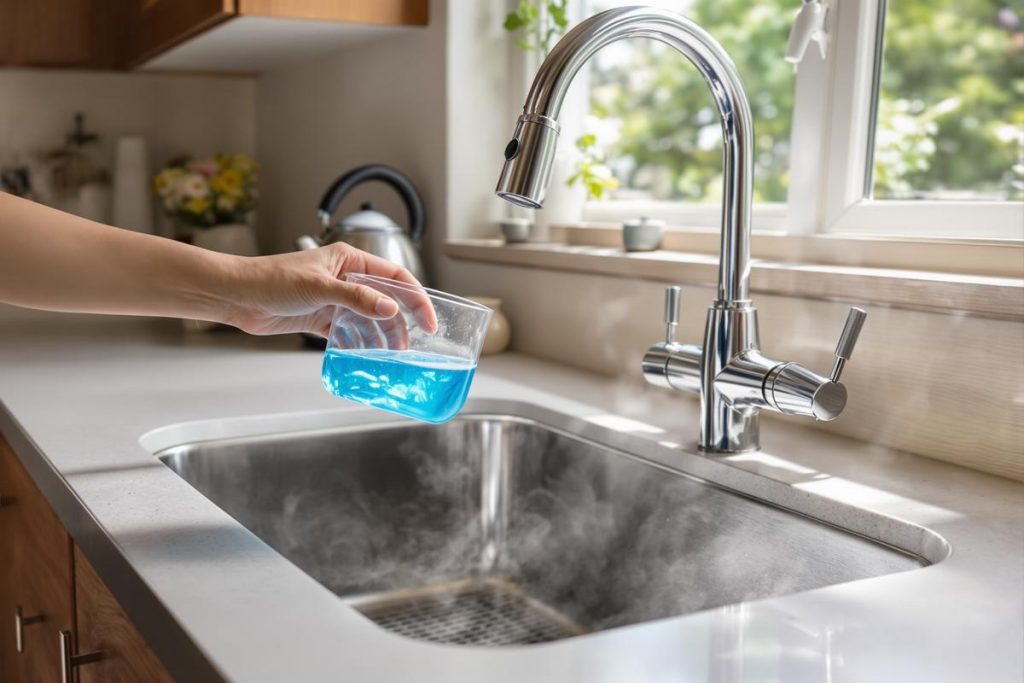
- Pour half a glass of thick dish soap into the drain
- Wait 10–15 minutes so the soap can spread along the pipes
- Slowly pour the hot water into the drain (pause if it backs up)
- Run hot tap water for 2 minutes afterward
This soft approach helps dissolve buildup in a gentle, gradual way—perfect for routine maintenance.
Enzymes: a more natural deep-clean
Bathroom drains often collect hair, mildew and body product sludge. That’s where enzyme-based cleaners shine. They don’t scrub or burn; they slowly digest the organic grime.
Here’s how to use them safely:
- Remove the drain cover and any visible hair
- Shake the enzyme bottle, then slowly pour half a glass into the drain
- Don’t use the sink or tub for 6–8 hours (overnight works best)
- Flush with warm water in the morning
This method is ideal for recurring slow drains, not full blockages. Many landlords love it because it’s pipe-safe and less damaging over time.
Use chemical cleaners only when necessary
Sometimes a clog is too major for mild tricks. That’s when some try sodium hydroxide-based drain cleaners. Even then, the half-glass rule still applies: use less, and let it sit.
Important safety tips:
- Always wear gloves and keep your face away
- Never mix with other substances like bleach or vinegar
- Stick to half a glass—don’t eyeball it
- Follow label instructions, then flush with cold water first, then warm
Too much caustic cleaner can melt plastics or push the clog deeper. It’s strong stuff—treat it with care.
Why this stands apart from vinegar and baking soda
Baking soda and vinegar fizzle nicely, but that’s about it. The fizz is mostly carbon dioxide bubbles and salty water. Dramatic, yes. Deep-cleaning? Not really.
The half-glass trick works by focusing on the one thing that matters: contact time with the clog. That’s how you break down what’s actually there.
Keep your drains clear with better habits
Even the best trick won’t matter if bad pipe habits continue. Here’s how to keep your drains flowing:
- Keep grease, fat and coffee grounds out of the kitchen sink
- Use hair catchers in showers and tubs
- Flush hot water down bathroom drains weekly
- Use enzymatic cleaners once a month if clogs are common
Think of this the same way you brush your teeth: small, regular effort beats emergency fixes.
When you should call a plumber
Some signs mean it’s time to step back and bring in a pro:
- Water backs up in multiple sinks or tubs
- Toilets gurgle when other drains run
- Sewage smells in more than one room
These signals may point to a broken or clogged main sewer line. A plumber can inspect it with a camera and recommend the right fix.
Less waste, fewer chemicals, smarter choices
Beyond clean drains, this method fits a bigger picture. Cities spend millions removing clumped fats and wipes from sewer systems. The half-glass idea helps households use just the right amount of product instead of flooding pipes with unnecessary chemicals.
Try treating a slow drain like an experiment. Try dish soap on one side, enzymes on another. Track what works. Build your own routine based on facts, not fads.
In the end, one half glass might clear more than just a clog—it could change the way you think about plumbing care.