Cold weather might make your home feel cleaner, but inside your warm, cozy bed, an invisible battle is happening. Dust mites—tiny, allergy-triggering creatures—thrive in the very fabrics that help you sleep soundly. But here’s the good news: you don’t need extreme heat or harsh chemicals to evict them. Just one small change can reset your sleep and protect your bedding all winter long.
Why dust mites don’t hibernate in winter
Most people think dust mites fade away once summer ends. But they don’t. In fact, winter might be their perfect season. Heating systems dry out the air just enough for you to be comfortable—but not enough to stop mites from multiplying. Your mattress, blanket, and pillow become a cozy hideout full of food: dead skin cells.
You might wake up stuffy, sneezy, or with itchy eyes. And while throwing everything in a quick 30°C wash might seem fine, it won’t touch the root of the problem.
The magic number: 60°C
Washing bedding at 60°C is proven to reduce both dust mites and their allergens. Not too hot to damage your favorite fabrics, but warm enough to break the mites’ cycle. Research shows mites start to struggle at around 55°C. A well-run 60°C wash offers the best balance of cleanliness and fabric care.
- Too cold (30°C–40°C): Gentle on fabrics, but leaves most mites untouched.
- Too hot (90°C): Kills everything—including your fabric’s color and texture.
- Just right (60°C): Cleans deeply without wrecking your bedding.
A realistic winter wash routine
You don’t need to wash your bedding every day. In fact, it’s more important to find a rhythm that works and stick to it. Here’s what actually works without feeling like a chore:
- Pillowcases: Wash every week at 60°C—these touch your face every night.
- Duvet covers and sheets: Wash every 1–2 weeks at 60°C if the label allows.
- Pillows & duvets: Check the care label. If they can’t be washed hot, still wash the covers at 60°C and air out the insides outdoors or in a hot dryer.
- Drying: Always dry thoroughly. Dry air or a high-heat tumble cycle helps reduce moisture that mites love.
Protecting your bedding from wear and tear
One of the biggest fears with hot washes is damaging your linens. The truth? A 60°C wash is safe for most modern cotton when done right. The real damage usually comes from:
- Overloading your machine
- Using harsh detergents or bleach
- Blasting delicate sheets with wild temperature extremes
To make your bedding last longer:
- Use a reliable, gentle detergent
- Stick to a consistent wash temperature—don’t jump from 30°C to 90°C
- Lower spin speeds for delicate fabrics
What to look for on your washing machine
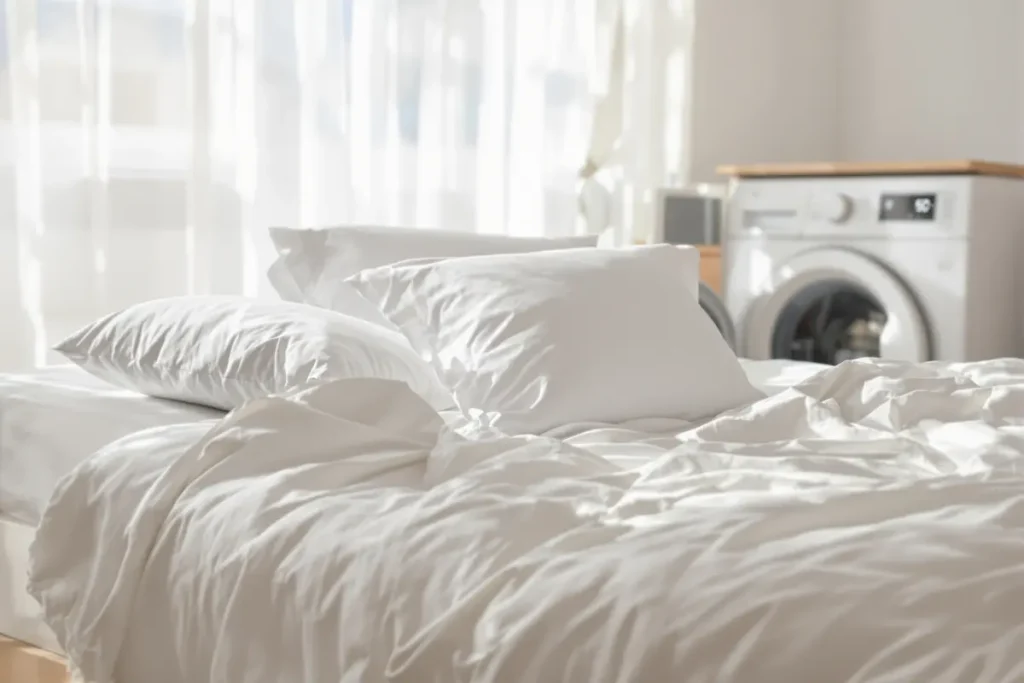
If your machine has a setting like “cotton 60°C” or “allergy/hygiene,” it’s perfect for winter bedding care. These settings often keep temperatures higher for longer, which helps remove allergens more effectively.
Can’t find the right setting? Run a full 60°C cycle with a normal spin. Avoid “eco” or “quick” cycles, especially at low temps—they’re friendly to fabric, but far too kind to dust mites.
Real changes, real results
Many people try everything—changing laundry detergents, blaming pets or old buildings—for stuffy sleep. But for some, switching to 60°C washes for just pillows and sheets did the trick. Slowly, the sneezing eased. The nighttime coughing faded. Colors stayed fresh. Fabrics remained soft.
It’s not about perfection. It’s about small wins:
- Fewer sneezing fits
- Clearer morning airways
- That fresh-sheet feeling lasting longer
Extra tips for keeping your bed fresh
- Rotate pillowcases more often than full sheet sets in winter.
- Keep at least two winter-friendly bedding sets that can handle 60°C washes.
- Add an extra rinse if your skin is sensitive—it helps remove detergent residue.
- Use allergen-proof covers for pillows and mattresses. They act like an extra barrier.
The quiet comfort of a clean bed
You won’t see the dust mites disappearing or the air getting cleaner. But your body will feel it. Your lungs will breathe easier. Your sleep may come faster. And your skin might stop reacting to those invisible irritants.
It’s not about extreme cleaning or chasing gadgets. Just one number on the dial: 60°C. That’s the sweet spot where your linens stay safe and your nights stay peaceful.