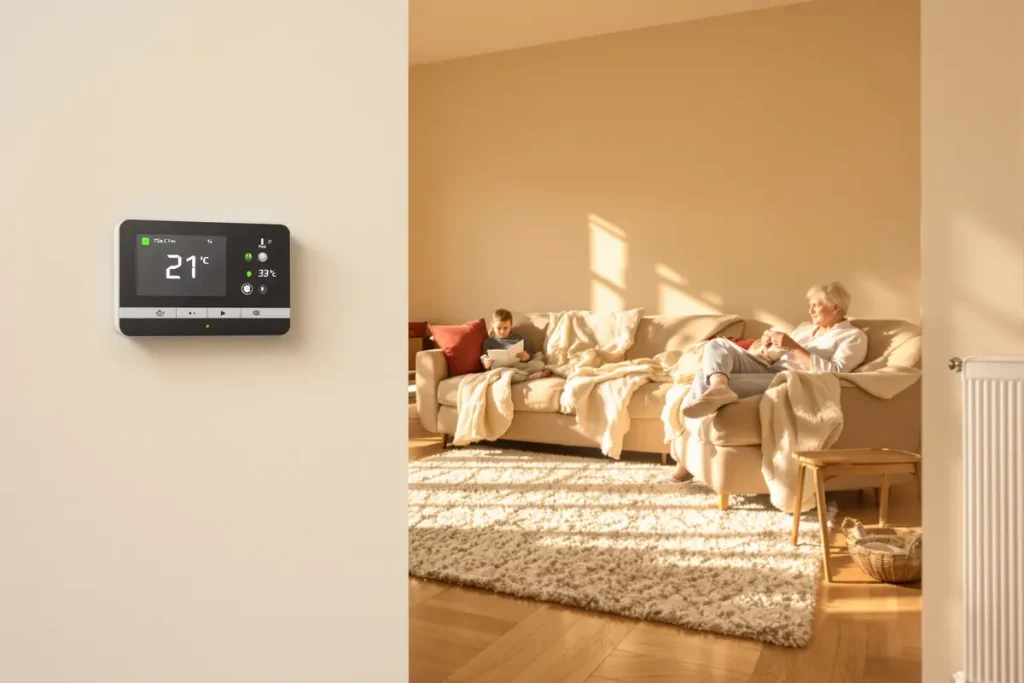
For years, 19 °C has been the golden rule of home heating. But this winter, that number might be leaving you cold—literally. Experts across Europe are now urging something different: a new, smarter way to warm your home that balances comfort, cost and health. So what’s the right temperature now?
Why 19 °C Doesn’t Work for Everyone
Let’s face it—19 °C sounds good in theory. It’s been the official advice for years, tied to energy saving and climate responsibility. But for many households, that number doesn’t feel warm enough. Especially in homes with poor insulation, single-glazed windows or high ceilings, 19 °C on the thermostat can feel much colder on your skin.
In fact, scientific studies show that poorly insulated homes often feel 1–2 degrees colder than the number on the thermostat, due to chilly walls and drafts. And when temperatures inside drop too low, health risks start to rise—more colds, more joint pain, more fatigue. That risk is even greater for the elderly, children, and anyone with heart or breathing conditions.
The New Comfort Zone: 20–21 °C Where It Matters
This winter, experts are shifting away from the one-size-fits-all model. Instead, they recommend creating warm zones in your home—especially in living areas—and leaving less-used spaces cooler.
- Living rooms and home offices: 20–21 °C for comfort and good health
- Bedrooms (for healthy adults): 17–19 °C for restful sleep
- Children’s and elderly people’s rooms: slightly warmer, up to 21 °C
- Bathrooms: only warm during use, not all day
- Corridors and spare rooms: around 17–18 °C, or lower if not used much
This approach, sometimes called “zonal heating”, helps maintain comfort without letting bills spiral. You focus warmth where you actually live, rather than heating the whole house evenly just for habit.
How to Keep Warm Without Breaking the Bank
You might worry that increasing your thermostat from 19 °C to 21 °C will send your energy bills through the roof. But here’s the good news: if you offset that increase with small savings elsewhere, you’ll barely notice the difference on your bill.
- Reducing hallway temperatures by 1–2 °C can cancel out increases in the living room
- Lowering unused rooms or turning off radiators saves more than you think
- Programmable thermostats and radiator valves help you heat smarter, not harder
- Keep heating at gentle, consistent levels during the day instead of big swings
Heating costs usually rise by about 6–10% for every extra degree. But if you only increase heat in one area—and reduce it by just a bit elsewhere—you can stay warm without shocking your wallet.
Upgrade Your Heating Habits
Changing your heating strategy doesn’t always mean gadgets or renovations. Sometimes, it’s about simple habits. Try picking one “comfort zone” in your home—like the living room—and keep it warm during the times you’re there.
Then build a routine around it:
- Set a heating schedule: early morning, mid-afternoon, and evening
- Aim for 20–21 °C in your core room when occupied
- Dial down to 17–18 °C in your absence or overnight
Supplement with cozy layers: warm socks, blankets, rugs underfoot. These small touches make a big difference, especially when paired with a room heated to 20 °C instead of shivering through 18 °C.
Heat with Compassion, Not Guilt
It’s easy to feel judged for turning the heating up—especially when public campaigns still linger on that 19 °C figure. But home heating isn’t just about energy charts; it’s about feeling safe, comfortable, and well. And that looks different for everyone.
If someone in your household is vulnerable—older, unwell, or very young—they may need warmth more than savings. And offering a boost of heat during illness or to welcome guests isn’t wasteful. It’s human. It’s thoughtful.
Here’s a cheat sheet for easy winter decisions:
- Living zone: 20–21 °C when in use
- Unoccupied bedrooms: 17–18 °C
- Setback mode overnight instead of turning off fully
- Use radiator valves to fine-tune each room
- Dress for the season: jumpers, slippers, and throws go a long way
- Watch for condensation: a sign your home may be too cold
A Warmer, Smarter Way Forward
The myth of 19 °C didn’t account for real life—drafty flats, energy stress, families with babies or grandparents. The new guidance is more flexible, and more human. Your winter temperature should serve your well-being, not be a badge of honour or shame.
So, this season, give yourself permission to aim for a realistic warmth: 20 or 21 °C in rooms you spend the most time in. Adjust gently elsewhere. Turn up when needed. Turn down when you can. It’s not about perfection. It’s about balance.
In the end, the thermostat is just a tool. What matters most is how your home feels. And you deserve a winter that feels more gentle, less punishing. Because warmth isn’t just physical. It’s emotional too.