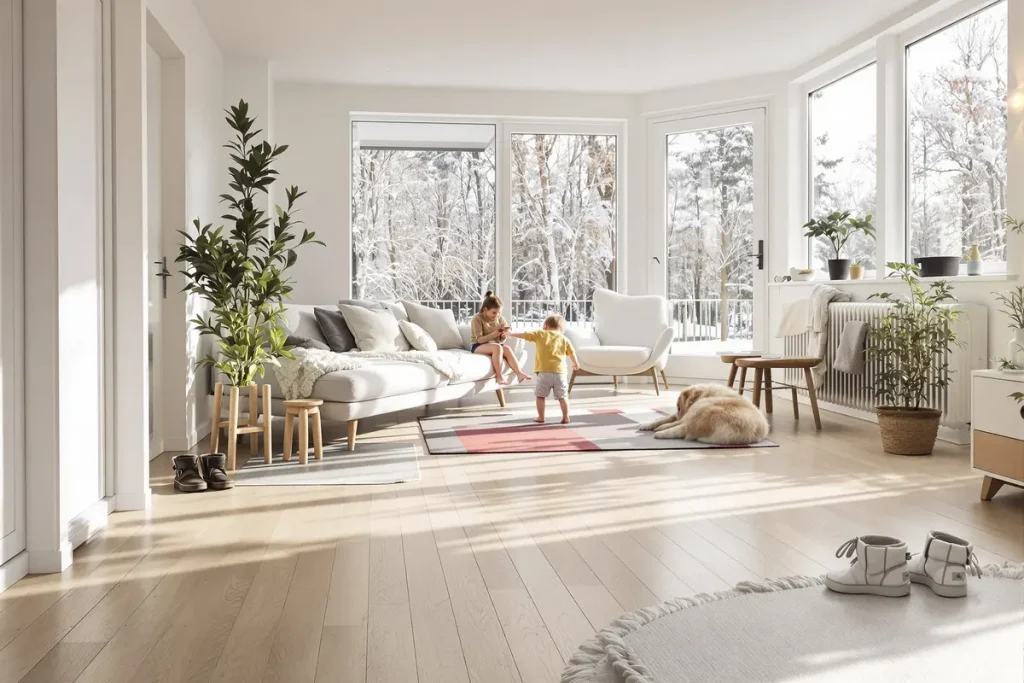
Imagine walking barefoot across your home in the middle of winter—no freezing shock, no icy tiles. Just a gentle warmth rising from the floor, wrapping around you like a quiet, invisible hug. In Finland, this isn’t some futuristic technology. It’s everyday life. And it’s made possible by something sitting right under your feet.
How Finnish homes stay cozy without radiators
Finnish winters are long and harsh. Temperatures can dive below -20°C, and yet inside, the homes feel calm, steady, and comfortable. What’s missing? Boilers, blasting vents, and big metal radiators.
Instead, Finns rely on a smart design choice hiding in plain sight: underfloor heating. Their floors—whether tile, laminate, or wood—are warmed gently from below using electric cables or water-filled pipes. The result is a smooth, even heat that doesn’t dry out the air or leave cold spots in the room.
The science: why heating from the floor makes sense
Heat naturally rises. Starting it at the floor means the warmth reaches your feet first, then slowly travels upward. This creates a comfortable gradient: warm at the bottom, cooler at the top.
That’s more in line with what your body wants to feel. You avoid the common radiator problem—hot air blasting your face while your feet freeze. Plus, with heat spread across the whole floor, you don’t need high temperatures. Just a mild, constant warmth will do the trick.
How the system works beneath the surface
Underneath the floor, you’ll find one of two main options:
- Water-based underfloor heating: Warm water flows through thin plastic pipes, often laid in concrete or special boards.
- Electric heating: Cables or heat mats are installed under the flooring in targeted rooms like bathrooms and kitchens.
Both methods react slowly but hold onto heat well. You just set a thermostat, let it work in the background, and enjoy steady warmth without noise or fuss.
The comfort shift: daily life on a warm floor
In a typical Finnish home, the change touches almost everything. Kids play on the floor. Pets sleep sprawled out in the middle of a room. People linger in the bathroom after a hot shower because the floor feels so good.
There’s no “quick blast” of heating. The system runs slowly and steadily, often kept at around 21°C. Many Finns lower the temperature at night just slightly, rather than turning it off entirely. The warmth becomes part of the home’s rhythm.
Simple design tweaks that support underfloor heat
To let the heat rise effectively, Finns keep their homes adapted in subtle ways:
- Furniture on legs: Sofas and beds stand slightly higher to let air move.
- Light rugs: Small, breathable rugs are used instead of thick carpets.
- Open floor space: Wet gloves or snowy boots go right on the warm floor to dry.
These small choices keep the floor functioning as a true part of the heating system—not just a surface to walk on.
You can try it at home—even without a full overhaul
Think you need a major renovation to enjoy this kind of comfort? Not necessarily.
In many homes, electric underfloor mats can be added during a small remodel—like when redoing a bathroom, hallway, or entryway. Start with just warming one key area and you’ll feel the difference.
Some simple starter ideas:
- Install a heated mat under bathroom tiles
- Add a warm zone near your home entrance for wet boots
- Use smart thermostats to control temperature steadily, not randomly
It’s not about copying everything. It’s about borrowing the mindset. Heating doesn’t have to mean loud machines or quick fixes. Sometimes, the best kind is silent, slow, and steady.
Common mistakes to avoid
If you’re looking to bring this idea into your own home, be mindful of what not to do:
- Don’t expect fast blasts of heat: This is background heating, not instant warmth.
- Avoid smothering the floor: Thick rugs or giant furniture can trap heat below.
- Don’t max out the thermostat: Low, constant settings work better than spikes.
This style of heating asks you to relax and let go of control a bit. No constant adjusting. Just quiet comfort growing with time.
What changes when warmth begins at your feet
Once your floor is warm, you stop tiptoeing across it. You start using it more. You might play card games on a mat, stretch after exercise, let your dog nap right in the center of the living room.
Your home starts to feel more alive, more stable. You’re not constantly flipping switches or shivering in corners. Instead, warmth becomes a steady presence—like a campfire that’s always quietly glowing, just beneath your feet.
FAQ: Answering common questions
- Do I need to rebuild my home to install underfloor heating?
No. You can add it during a room renovation, especially in the bathroom, kitchen, or hallway. - Is it expensive to run?
It depends. With good insulation and low settings, electric systems can be efficient. - Can I still use rugs?
Yes—just keep them thin and breathable to let the floor “breathe.” - How long does it take to warm a room?
A few hours, usually. It’s designed for stable comfort, not instant bursts. - Is it safe for kids and pets?
Absolutely. The floor gets warm, not hot—so no burns or overheated spots.
The Finnish way: quiet, efficient, human warmth
Underfloor heating changes more than your feet—it shifts how you experience winter itself. It teaches you to plan ahead, to trust steady warmth, and to find comfort not in loud machines, but in thoughtful design.
If you’re tired of the thermostat wars and cold bathroom tiles, maybe it’s time to take a cue from Finland: start heating from where it matters most—right beneath you.