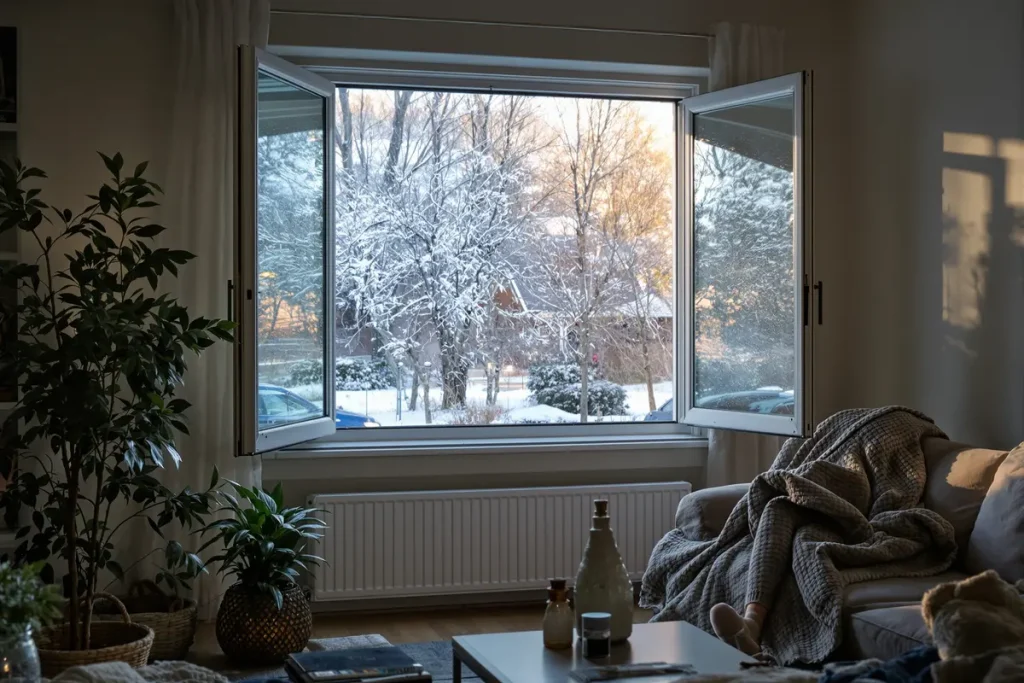
On a cold winter day, opening all your windows might feel like a fresh start. But if you leave them open too long, you could be inviting hidden problems into your home—like mold. Surprising, right? Let’s dive into why long winter airing can actually make your indoor air worse, not better.
Why airing out too long in winter can backfire
When it’s freezing outside, indoor air often feels stale. That’s why many people crack open their windows for a while, thinking it’ll freshen things up. And it does—at first. But if those windows stay open too long, your home can start to cool down deep into its bones.
It’s not just the air that gets cold. Your walls, floors, furniture, and windows also lose heat. And when those surfaces cool down, they become magnets for moisture.
Here’s the tricky part: that cold outside air is dry. But once it warms up inside, it can hold more water. So your indoor humidity drops quickly—at first. Then you cook, shower, breathe… and all that moisture has nowhere to go. It hits those cold surfaces, condenses, and boom: extra humidity and mold risk.
The hidden mold trap: cold surfaces and moisture
Think of your house like a sponge. If it stays cold, it soaks up moisture slowly over time. And that moisture settles in places you can’t always see—behind furniture, in window corners, and under beds.
For example, in one flat, a couple started opening their windows wide every morning for 45 minutes. It seemed like a good habit—until dark mold spots showed up around their bedroom. The irony? Their landlord said they weren’t airing out enough.
But the real problem wasn’t too little ventilation. It was that their home’s surfaces were staying cold day after day. So instead of drying out, their place became a mold magnet.
How to air out smartly in winter
Luckily, there’s a better way. Experts recommend something called “shock ventilation.” It sounds dramatic, but it’s really very simple.
- Open windows wide in at least two opposite rooms
- Air out for just 5–10 minutes
- Close windows quickly afterwards
This short, powerful swap of air avoids cooling down your walls. You bring in fresh, dry air that can quickly carry away indoor moisture. And your radiator won’t have to work overtime to heat your place back up.
Little routines make a big difference
Instead of one big “airing event,” smaller habits can make all the difference:
- After cooking pasta or stir-fry? Open the kitchen window for 10 minutes.
- Finished a hot shower? Turn on the fan or open the bathroom window—just for a bit.
- Before bed? Crack the bedroom window wide for 7 minutes, then close it.
Consistency beats extremes. Leaving a tipped window open all day feels helpful, but it keeps the room too cool for too long. That’s when humidity settles in and causes trouble.
Pay attention to the signs
Your home sends signals when things aren’t quite right. You just have to notice them:
- Foggy windows every morning? That means your room’s too humid at night.
- A musty smell near the couch or curtains? There’s likely hidden moisture.
- Quickly-filling dehumidifier? You might be creating too much moisture from laundry or long showers.
If you spot these signs, don’t panic. Just tweak your habits and be consistent.
Make it a team effort
If you share your home with others, talk about it. Set small house rules like:
- No laundry drying in bedrooms
- Always use the bathroom fan during showers
- Air the kitchen right after cooking
It’s not about being strict—it’s about building smart, simple habits together.
Key takeaways for healthier winter air
| Key Tip | What It Means | Why It Matters |
|---|---|---|
| Short ventilation is best | 5–10 minutes, windows wide open | Refreshes air without chilling the structure |
| Avoid tilted windows | Don’t leave windows cracked open all day | Keeps heat in and moisture out |
| Focus on moisture spots | Ventilate kitchen, bathroom and laundry areas | Targets areas most likely to cause damp |
| Read your home’s signals | Condensation, smells, mold spots | Helps you react and adjust habits early |
| Work as a household | Share clear, simple routines | Prevents mold and cold-related fights |
Fresh air without the chill
The real trick to winter comfort isn’t airing out more. It’s airing out smarter. A quick burst of fresh air, then back to cozy warmth—that’s the balance.
No more rushing to wipe off condensation every morning. No more wondering why your heating struggles to catch up. Just fresher air, fewer mold spots, and a home that feels healthier.
So next time you reach for the window latch in January, ask yourself: what’s the smarter move? A quick draft can do wonders—without turning your home into a fridge. And that’s the real power of good winter ventilation.