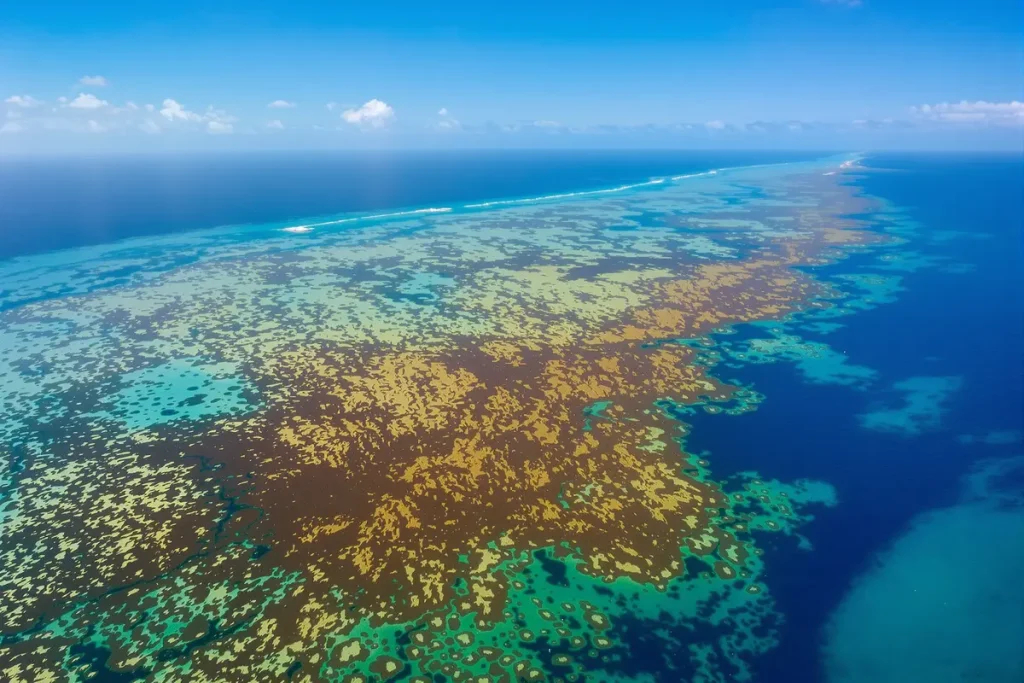
From the sky, it looks like a strange mistake—a brown line streaking across the deep blue sea. But this isn’t a shadow or a spill. It’s real, massive, and growing. A floating belt of seaweed has taken over parts of the Atlantic, and experts are sounding the alarm.
What is this mysterious brown ribbon?
This isn’t just seaweed drifting aimlessly. It’s called the Great Atlantic Sargassum Belt, a massive stretch of floating brown algae known as sargassum that’s now so big, it’s visible from space.
This giant ribbon hugs the West African coast and stretches across the Atlantic, sometimes reaching over 8,000 kilometers in length. That’s like a floating forest moving between continents.
At first glance, sargassum might seem harmless. In open waters, it actually helps marine life, creating shelter for fish and turtles. But when it grows in huge masses and drifts ashore, it becomes a serious problem for both people and ecosystems.
Why is it growing so fast—and so large?
The simple answer? It’s being fed by pollution and climate change.
- Rivers like the Amazon, Congo, and Mississippi carry tons of fertilizer and waste runoff into the ocean. These nutrients act like plant food for the sargassum.
- Meanwhile, warmer ocean temperatures—linked to climate change—help the algae grow faster and survive longer.
- Strong currents stretch the seaweed into a long, floating path that crosses the Atlantic, from Africa to the Caribbean.
In short, we’re unintentionally fertilizing the ocean from thousands of kilometers away—and the ocean is responding with this massive brown line.
The real-world impact along the coasts
The effects of this ribbon are being felt far from the open sea. On beaches from Senegal to Mexico, sargassum is piling up waist-deep. It smells horrible, like rotten eggs, sunscreen, and grilled fish all mixed together.
That smell comes from hydrogen sulfide gas, released as the algae rots in the heat. The result? Headaches, eye irritation, nausea, and in some cases, even breathing issues.
Fishermen are losing work because their boats get tangled or blocked. Hotels are losing money because tourists turn away. Cleanup costs are enormous—millions of dollars per year in some Caribbean countries. And that money doesn’t go to schools or hospitals. It goes to shovels, trucks, and fuel.
Why this brown line matters to everyone
This phenomenon isn’t just about seaweed. It’s a visible sign of deeper problems. Scientists say it reflects a collision of climate change, industrial farming, and poor water management.
And the worst part? This is becoming the “new normal.” What used to be occasional outbreaks have now turned into yearly events—2011, 2015, 2018, 2023—each time worse than before.
This isn’t just nature acting strangely. It’s a message written in algae, telling us something important about how we treat the planet.
How some communities are fighting back
Luckily, some places aren’t waiting around. They’re getting creative.
- Early-warning systems predict when and where the seaweed will arrive.
- Floating barriers can stop large mats from reaching sensitive beaches.
- Cleanup boats collect the algae offshore, before it falls apart and releases gas.
- Startups and scientists are turning the seaweed into products like fertilizer, bricks, and even bioplastics.
These aren’t perfect fixes, but they turn frustration into action. And they show that local responses can make a big difference—even with a problem so huge.
What you can do about it
You might be thinking, “How can I help with a seaweed crisis on another continent?” It’s a fair question. But even small choices can matter.
- Check sargassum forecasts when planning beach trips.
- Support eco-friendly hotels that handle cleanup safely.
- Follow trusted ocean science sources—not just viral videos.
- Back businesses that recycle sargassum into useful products.
- Think twice about your own pollution footprint—from food to fuel to plastic use.
No one person can stop the belt. But many people working together? That changes the story.
A warning we can’t afford to ignore
Looking down from a plane, that brown ribbon might seem harmless—a strange mark on the sea. Up close, it’s anything but. It affects real businesses, real families, real health.
And it’s not going away.
The oceans are sending us a message. The line we see floating on the water? It’s also a line we’ve crossed—with farming, pollution, and warming temperatures. The longer we ignore it, the harder it gets to live beside it.
But the good news? If we can read this sign clearly, we’ve already taken the first step toward changing it.