Every morning, most of us throw pure plant fuel straight into the trash—like it’s worthless. But what if the peels, grounds, and shells sitting in your bin were exactly what your tired houseplant has been begging for? That “black thumb” you blame? It might just need a spoonful of coffee—and not in your mug.
The secret treasure in your kitchen trash
What if you could feed your plants with scraps you already have? Most people miss it. They toss coffee grounds, eggshells, and banana peels without a second thought. But to a struggling plant, that’s like wasting vitamins.
- Used coffee grounds: rich in nitrogen and organic matter
- Crushed eggshells: packed with calcium carbonate (about 95%)
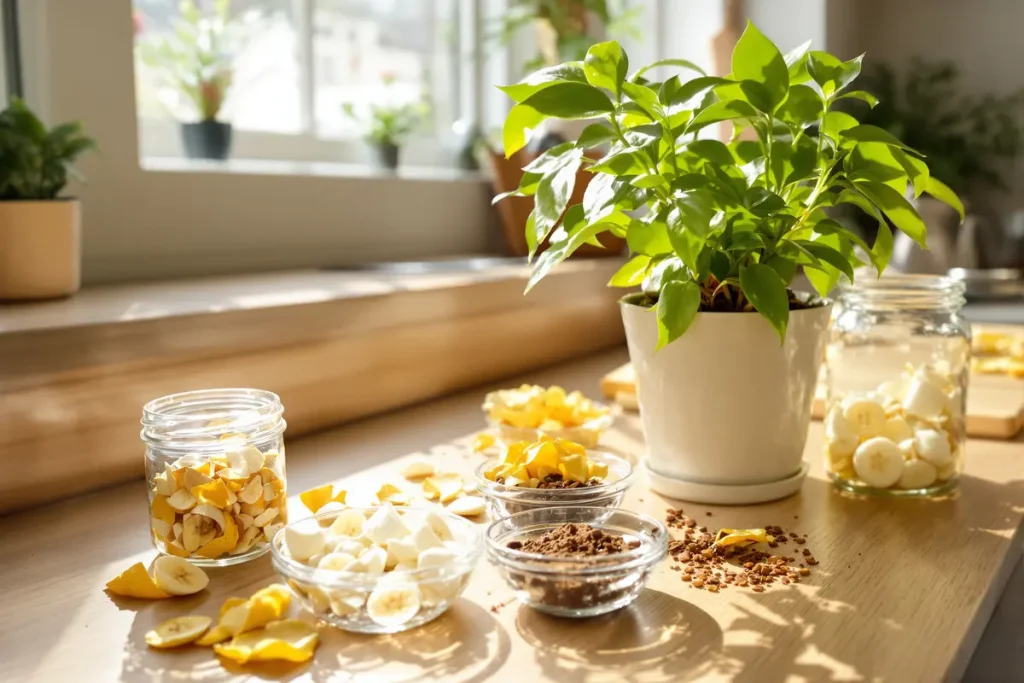
- Banana peels: a gentle source of potassium and phosphorus
These aren’t exotic fixes. They’re just pieces of your everyday routine. And they can help turn limp basil and fading ferns into lush, leafy stars on your windowsill.
How to start—no gear, no compost bins
You don’t need a backyard or a three-tier compost tower. You only need a jar and a little curiosity. Start with one waste item and reshape its journey.
- Coffee grounds: Let them dry on a plate, then sprinkle lightly into soil weekly
- Eggshells: Rinse, dry, crush into flakes; mix during potting or scatter around plants
- Banana peels: Cut small and bury; avoid leaving them exposed
Think of it like seasoning—not stuffing. A light hand gives better results. Too much at once can lead to mold or unhappy plants.
Why plants love these simple scraps
Plants take time to answer. You won’t get instant results—but give them a few weeks, and watch what happens. New shoots. Deeper green. Healthier leaves. That’s no accident.
When scraps are mixed into soil, microbes and fungi go to work. They transform waste into nutrients plants can absorb. Earthworms help too, pulling tiny particles deeper. That turns your flowerpot soil into a thriving mini-ecosystem.
This isn’t just gardening. It’s chemistry wrapped in compost. And it’s happening quietly beneath the surface, while you go about your week.
Design for your routine, not perfection
Here’s the truth: most of us won’t build a perfect compost pile. And that’s okay. You don’t need perfection. You need access. Stick your scrap container next to the kettle or cutting board. If it’s easy, you’ll do it. If it’s a hike to the shed… you won’t.
Watch out for easy mistakes:
- Don’t pile coffee grounds thickly—they clump and block water
- Don’t dump fresh citrus near seedlings—they can stunt growth
- Don’t pour everything at once—introduce scraps gradually
Keep it small, light, and repeatable. That’s the recipe for success.
The quiet magic of slow change
Over time, this low-effort habit becomes something more. You start to care for a plant. It grows back. You notice. And slowly, you stop calling yourself “bad with plants.”
That small shift matters. It’s not just about recycling. It’s about reconnecting with something simple and alive—without needing a 10-step plan or fancy gear.
One woman shared how sprinkling crushed eggshells into her monsteras gave her a weird sense of pride. Nothing changed but that. Still, it felt like a win. And she kept going.
This isn’t just about plants—it’s about you
Each morning, you decide where those scraps go: the landfill or the roots waiting nearby. Seems small. But it’s one of the few daily choices that flips from waste to worth in under 10 seconds.
And when someone sees your newly thriving basil and asks what you did? Say it proudly: “Eggshells.” That tiny answer could grow into something bigger than you think.
Quick guide: Turning waste into plant gold
- Dry used coffee grounds, sprinkle in soil weekly—sparingly!
- Crush clean eggshells into flakes; mix into potting soil or around plants
- Cut banana peels into small chunks and bury, not pile
- Keep a small open jar for scraps in an easy-to-reach spot
- Adjust gradually; notice your plants’ response, then tweak
Frequently Asked Questions
What kitchen scraps are best to begin with?
Start with coffee grounds, eggshells, and banana peels. These are gentle, low-odor, and suitable for almost any plant.
Can I just throw fresh scraps on the soil?
It’s best to dry, crush or chop them first and mix gently into the topsoil. This prevents mold, flies and bad smells.
Will this replace fertilizer?
For many houseplants and balcony gardens, it can cover a large part of their needs. Heavier feeders might still want an occasional boost.
Is it safe for indoor pots?
Absolutely—just keep it clean and modest. No wet piles on the surface.
When will I see results?
Changes usually appear in 3 to 8 weeks. Look for stronger shoots and richer leaf color.
You don’t need to be a gardener
You just need to pause next time you tip eggshells toward the bin. Picture your plant. Picture the roots. Picture the loop. Then give it just a little of what it’s waiting for.
One tiny choice, repeated. That’s how your trash turns into life.