Imagine walking into a home and seeing… no dining table. No bulky centerpiece surrounded by stiff chairs. Just open space, cozy platforms, and furniture that moves with life. This might sound unusual—but it’s quickly becoming the norm in homes across the globe. A new trend is redefining how and where we gather to eat, work and connect.
Why are people ditching the dining table?
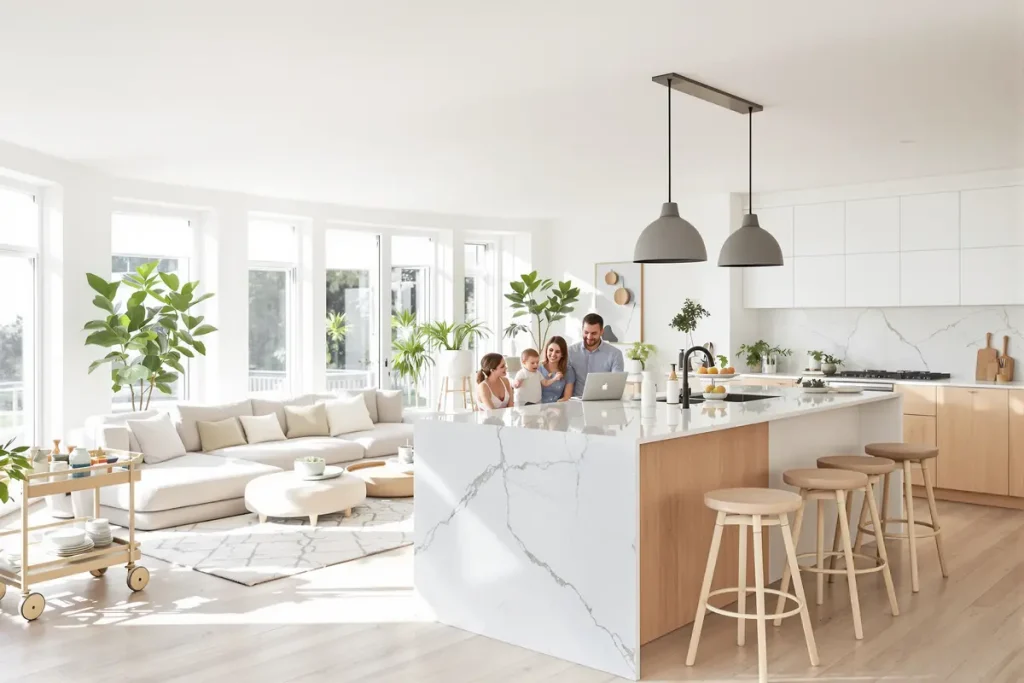
Across cities like Seoul, Copenhagen, Toronto and Barcelona, more homeowners are saying goodbye to the classic dining table. In its place? Modular setups that reflect the way we really live. Think kitchen islands doubling as desks, cushioned platforms that shift from lounge to dinner zone, and rolling carts that bring meals to wherever you are.
Surveys show that nearly 60% of new open-plan renovations put money into a large island instead of a separate dining set. The reason is simple: today’s lives are overlapping. People juggle remote work, family dinners, hobbies, and meetings—all in the same space. A single-purpose dining table no longer makes sense.
What replaces the traditional table?
The alternatives vary, but they all share one thing: flexibility. Here’s what homeowners are using instead:
- Oversized kitchen islands—for meals, laptops, and casual hangouts
- Low platforms with cushions—popular in East Asian-inspired homes
- U-shaped sofas with sturdy trays—dining meets lounging
- Built-in benches with storage—multitasking zones with cozy corners
- Drop-leaf panels and trolley tables—ideal for tight spaces
One Parisian studio shows how creative this trend can be. A fold-down wall panel becomes a breakfast bar. A cutting board across the sink works as extra counter space. Everything folds, slides, or rolls. The result? More breathing room without sacrificing function.
How do shared meals survive without a table?
This isn’t about eating alone on the sofa in front of a screen. In fact, it’s the opposite. Removing the formal table often makes mealtimes more relaxed and inviting. Instead of stiff routines, families gather in more natural, comfortable ways.
Designers and psychologists agree: when a surface has multiple uses, people engage with it more. A rigid table says, “Sit properly.” A broad sofa armrest or a soft cushioned corner says, “Come as you are.” One cozy dinner, laptops and socks included, can still feel as heartfelt as a formal feast.
Key tips for making the transition
Not sure where to start? Ask yourself: Where does life gather in your home? That spot becomes your new core. From there, build around it with these tips:
- Choose one main surface where at least three people can gather comfortably
- Add two to three movable elements—like trays or side tables
- Include one ritual object (lamp, plant, candle) to mark the gathering zone
Even in small spaces, a flexible eating setup is possible. Try a lift-top coffee table or a fold-out wall desk. Live with these small shifts for a few weeks, then decide if the big table still earns its space.
Is this just a trend—or a glimpse into the future?
This shift isn’t about design fads. It reflects deeper lifestyle changes: hybrid work, smaller homes, open living spaces. As our daily roles blur, our rooms—and our furniture—need to keep up.
The truth is, the dining table has often become a clutter zone. Mail stacks up, laundry piles appear. Letting go of it isn’t about giving up on togetherness—it’s about redefining it. The warm feeling of looking at someone and asking, “How was your day?” can happen anywhere, as long as we make space for that moment.
What could you do with that extra space?
Think about it: if you freed up four square meters today, how would you use them? A yoga mat corner? A mini library? A bigger play area for your kids? Just the act of asking changes your mindset—you’re not furnishing a fixed room, you’re curating a living scene.
Start small, experiment bold
You don’t need a full renovation. One night, skip the table. Eat at the island, or with trays on the deck. See how it feels. Is the conversation looser? Do people linger longer? Maybe you’ll uncover the kind of space you’ve truly been needing all along.
Because in the end, it’s not the table that holds us together—it’s the time we make for each other.