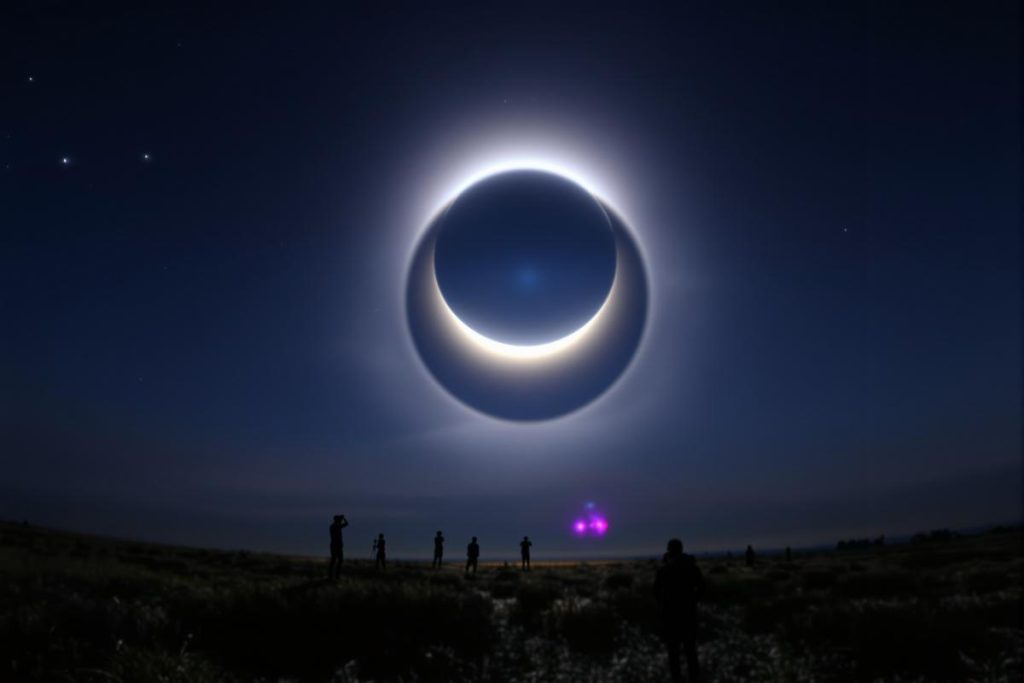
Picture this: it’s the middle of the day, but the sky turns dark. Birds go quiet, the air cools, and the Sun becomes a glowing ring of fire. It’s not science fiction—it’s the longest total solar eclipse of the 21st century, and it’s coming soon. And yes, the duration will truly surprise you.
A Solar Eclipse Like No Other
Solar eclipses happen when the Moon passes directly between the Earth and the Sun, casting a shadow on our planet. Most total eclipses last only two or three minutes. But this one? It’s different. It’s set to last up to seven incredible minutes in some places—making it the longest total solar eclipse of this century.
That’s enough time to feel the temperature drop, see stars appear in the daytime, and take in the strange hush of the world around you. If you’ve ever seen a solar eclipse before, this might feel like an entirely new experience.
Why Is This Eclipse So Long?
The secret lies in the Moon’s orbit. When it’s closest to Earth—called perigee—the Moon appears slightly larger in the sky. This helps it cover the Sun completely and for longer.
Also, the path of the eclipse and the speed of Earth’s rotation work together to slow down how fast the shadow moves across the surface. The result: extended darkness that makes this eclipse truly exceptional.
How Long Will the Darkness Last?
The exact duration depends on where you are. People at the center of the eclipse path will get the full show, while those near the edges will see shorter totality or just a partial eclipse.
| Zone | Type of Eclipse | Approximate Duration |
|---|---|---|
| Central path (near midpoint) | Total | Up to 7 minutes |
| Central path (near edges) | Total | From tens of seconds to a few minutes |
| Outside totality band | Partial | Several hours of partial phases |
Where Will You See It?
The path of totality is a narrow strip across Earth. Only people in this band will see the Sun totally covered. Cities just a few kilometers apart might witness completely different events. Some will step into near-night at noon. Others will see only a crescent Sun.
If you’re close enough, it’s worth traveling into the totality zone. The difference is huge—and unforgettable.
What Makes Totality So Special?
Partial eclipses are neat. But totality? It changes everything. Here’s what to expect during those amazing minutes:
- Stars and planets become visible
- Temperature drops by several degrees
- Animals react, thinking night has arrived
- The Sun’s corona becomes visible—a glowing white halo
Those extra minutes of darkness allow you to soak it all in—something you just don’t get with shorter eclipses.
A Golden Opportunity for Science
This eclipse isn’t just amazing to watch. It’s also a big deal for scientists. During totality, researchers can study the Sun’s outer layer—the corona—which is usually hidden by intense sunlight.
With more time to observe, astronomers can collect images, data, and spectra to help understand solar winds, coronal temperatures, and more. Even Earth’s atmosphere responds to the sudden change in light, revealing surprising jumps in pressure and wind patterns.
How to Watch It Safely
Never look directly at the Sun without protection. Regular sunglasses won’t help. You’ll need certified eclipse glasses or special solar filters. Telescopes and cameras should have filters placed on the front end—not at the eyepiece.
During totality, when the Sun is fully covered, it’s safe to look with your naked eyes. But as soon as even a tiny piece of Sun peeks out, put those glasses back on.
Make It Memorable—What You Can Do
Want to enjoy the eclipse to the fullest? Try some simple activities:
- Use a pinhole projector or colander to cast crescent shapes on the ground
- Track temperature changes with a thermometer
- Record animal sounds before and during totality
These mini-experiments make the event even more exciting—especially for kids and curious minds.
Where and When to Travel
Planning to see the eclipse in its full glory? Book early. Hotels on the eclipse path fill up fast. Roads can get crowded as people race to the centerline.
It’s smart to check these factors when choosing your viewing spot:
- Typical weather and cloud cover
- Local facilities and emergency services
- Safe access points
Even getting just 10 km closer to the center can mean doubling your view time. So don’t settle for less if you can help it.
Why This Eclipse Is More Than Just a Show
For thousands of years, people saw eclipses as omens or miracles. Now we understand them—but the awe remains. This incredibly long eclipse reminds us that even with science, some sights take your breath away.
It’s also a rare teaching moment. From classrooms to community centers, people will be gathering to witness the power of nature and math in action. And oddly enough, this kind of eclipse won’t last forever. The Moon is slowly drifting away from Earth, making long total eclipses rarer over time.
Try a Rehearsal—Or Look to the Sky
Want to be ready? Use sky simulation apps to see how the eclipse will appear in your area. If you’ve got a telescope or camera, do practice runs during sunsets or smaller eclipses. That way, you’re ready for the real thing.
If this eclipse fascinates you, keep watching the skies. Lunar eclipses, occultations, and other rare events show us again and again how beautiful our solar system’s movements can be.