Think storing veggies in the fridge keeps them fresher? It might be doing the exact opposite—at least for some of your favorites. This winter, your fridge could be speeding up spoilage instead of preventing it. Let’s look at the top five vegetables that hate the cold—and learn easy ways to help them last longer.
1. Potatoes
Never store potatoes in the fridge. The cold temperatures—usually around 3–5°C—cause potatoes to convert their starch into sugar much faster. That makes them taste oddly sweet and gives them a weird texture when cooked.
Once that sugar forms, cooking them leads to faster browning and a bitter, burnt flavor. Plus, if kept in the fridge too long, they become soft, start to sprout, and lose their firm texture.
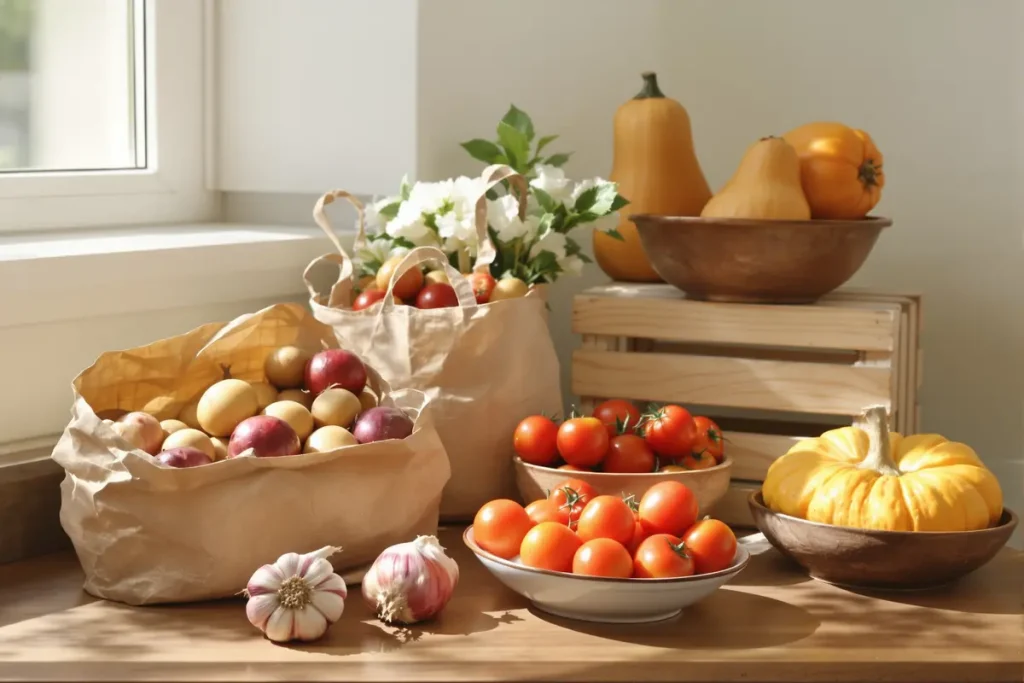
Better spot: A dark, cool place between 7°C and 12°C. Use a paper bag, wooden crate, or cloth sack somewhere like a pantry, ventilated cupboard, or unheated hallway.
2. Onions
Fresh onions like it dry—not cold and damp. Sticking them in the fridge speeds up spoilage by trapping them in a humid box. That can lead to soft, moldy spots and early sprouting.
They also absorb moisture and smells from nearby foods, which ruins their aroma and bite.
Better spot: Keep them in a breathable basket or mesh bag in a cool, ventilated space. Make sure air can flow freely to keep them firm and flavorful.
3. Garlic
Like onions, garlic prefers dry air and not-too-cold spaces. In the fridge, it can get moldy or start to sprout quickly. The flavor also fades if it sits too long in a cold environment.
Better spot: Store garlic in a paper bag, mesh bag, or open bowl in a cool, dry area—nothing fancy! Just a consistent, chilly corner away from heat and direct sunlight.
4. Tomatoes
Tomatoes are warm-weather fruits—and act like it. When chilled below 10°C, they get “chilling injuries.” That means the texture turns grainy, the flavor goes flat, and overall quality drops fast.
That sad, mealy tomato in your fridge drawer? A result of storing it too cold too fast.
Better spot: Leave whole tomatoes in a bowl or box in the coolest part of your kitchen during winter. As long as the temperature stays around 8–12°C, they’ll last longer and maintain their taste.
5. Winter Squash
Butternut, acorn, and other winter squashes don’t thrive in the fridge. The moisture and chill can make their skins soft and lead to moldy spots or decay from the base.
They’re built for tough storage conditions—so give them the space to shine.
Better spot: Store in a well-ventilated, cool area between 10–15°C. Your unused hallway shelf or a box by a north-facing window might be perfect.
Use Winter’s Natural Chill to Your Advantage
Your home has built-in storage spaces—even if you don’t realize it. In wintertime, unheated hallways, stairwells, laundry rooms, or kitchen corners can hold the perfect temperature range of 5–12°C, ideal for storing hardy produce without chilling damage.
Grab a spare thermometer and do a “cold zone” test. You might find a natural cold room right under your nose.
A Simple Sorting Trick That Changes Everything
When you unpack your groceries, don’t rush to the fridge. Instead:
- Fridge-friendly: spinach, herbs, mushrooms, chopped veggies
- Fridge-haters: potatoes, onions, garlic, tomatoes, squash
- Flexible zone: carrots, beets, cabbage, leeks
Give the right veggies a home in a paper bag, wooden box, or breathable basket. It takes just five minutes—and can save you days of freshness and flavor.
Real-Life Examples Make the Case
In one Paris apartment, a couple tried storing half their produce in the fridge, half by a balcony door where the temperature stayed around 9°C. After three weeks, the fridge potatoes were wrinkled, sweet, and sprouting. The others? Still firm, earthy, and ready to roast.
Tomatoes in the kitchen corner kept their scent and color. The ones in the fridge? Mushy and dull within days.
Make It Easy to Remember
You don’t need a perfect system—just a few starter hacks:
- Stick a list on the fridge: “No fridge: potatoes, onions, garlic, squash, tomatoes.”
- Designate a “winter storage” box: Put it in a consistent cool spot and always return your hardy veg there.
- Trust your senses: if something starts drying out, move it to somewhere slightly cooler or adjust airflow.
Rethink Fresh This Winter
We often think a fridge is the only option. But in cold weather, your house might be even better at preserving the vegetables that hate being too cold. Lower your food waste, enhance flavors, and love your veggies longer—all by choosing the right home for them.
A fridge works wonders for some foods. For others, it quietly shortens their life. This winter, trust the old wisdom: where the cold is gentle, the vegetables thrive.