Ever notice how your home starts to smell… off as winter settles in? You clean, you vacuum, maybe even light a candle — but that damp, tired scent clings to the air. It’s not just in your head. And there’s one simple habit most people skip that could change everything.
Why homes smell musty in winter — even when they’re spotless
It’s January. The heat hums, windows stay closed, and the air inside starts to feel heavy. Clean counters, mopped floors, fluffed cushions — but something still smells stale. Why?
In the cold months, we seal our homes to stay warm. That means less fresh air and more of everything else: cooking steam, laundry dampness, bath moisture, and body scents. It all lingers. And while scented products add fragrance, they don’t clear the air. They just cover up the problem.
Consider how you live in winter:
- Windows stay shut, trapping smells inside
- Clothes are dried indoors, adding humidity
- Heaters run full-time, but nothing moves the air
- Doors stay closed to “keep the heat in”
The result? Your clean home becomes a sealed jar of tired air. And your nose notices the “stale” long before your guests do.
The overlooked fix: slow and steady ventilation
Most people think opening a window for five minutes will do the trick. But that sudden blast of cold rarely solves the issue long term. What your home needs is gentle, regular ventilation.
Think of it as your house breathing — slow, constant inhales and exhales that keep the air moving. Here’s how:
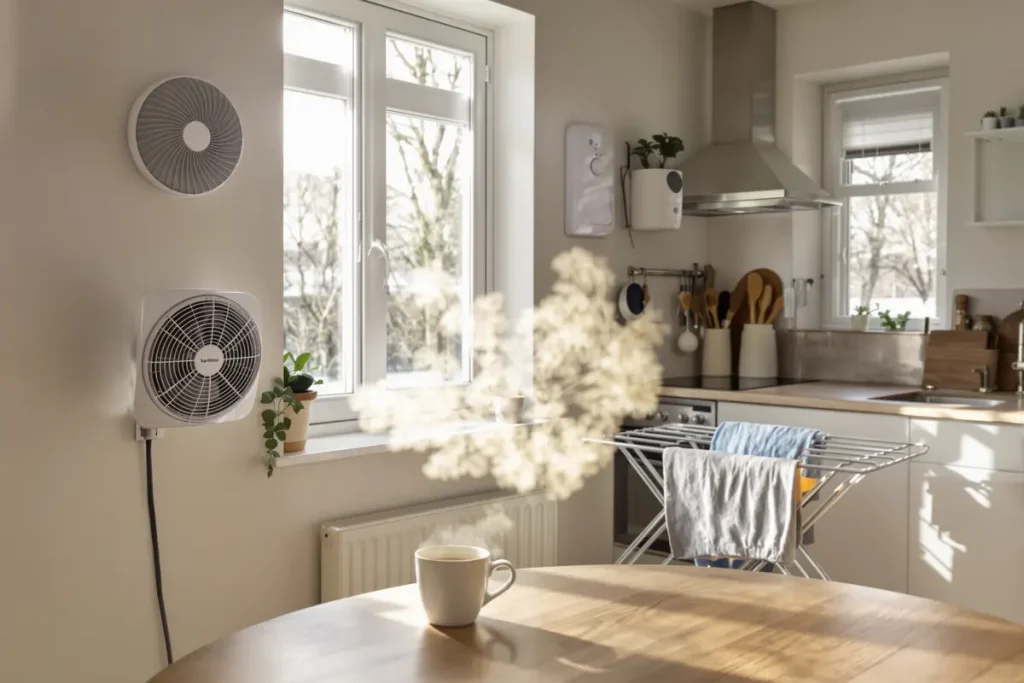
- Run bathroom and kitchen fans for 15–20 minutes after steam or cooking
- Use trickle vents at the top of your windows — they’re made for this
- Open two opposite windows slightly for 5–10 minutes to create cross-flow
- Dry clothes in one room with a window slightly cracked
- Keep humidity between 40%–60% to stop smells from clinging
Letting in a touch of cool, dry air can make your space feel fresher — and even warmer — because damp air makes a room feel colder, which makes you turn up the heat unnecessarily.
Face the invisible: air matters more than surfaces
We wipe and mop what we can see. But air? It floats around, collecting every trace of our daily lives. Without an exit, those invisible particles settle into fabrics, walls, and furniture.
That’s why over-cleaning surfaces while forgetting ventilation never works. You’re scrubbing the wrong thing.
Here are small swaps that make a big difference:
- Use extractors that vent outside — not ones that just recirculate
- Open trickle vents even in winter — they’re built to retain heat
- Aim for short air changes instead of keeping one window cracked all day
Worried about your heat bill? Don’t be. These short bursts of air replacement won’t drop indoor temps significantly. In fact, they can help you feel warmer because dry air is easier to heat.
Make clean air part of your winter routine
This isn’t about turning your home into a wind tunnel. It’s about giving stale air a chance to leave and letting your house “exhale” once in a while.
A few simple habits can make that musty winter smell disappear:
- Add a 5–10 minute air exchange to your cleaning checklist
- Use fans longer than you think you need to
- Don’t just rely on candles or sprays — they cover, not clean
And the change isn’t just in your nose. Fresh air lifts mood. It makes your home feel more alive — like something is moving, even when everything outside is still and gray.
Common questions about winter air and musty homes
Why does my house only smell stale in the winter?
In colder months, we keep everything shut tight. You cook, you shower, you live — and all those particles stay inside. Without airing out, they build up and flatten the scent of your home.
Does opening windows really help, even when it’s freezing?
Yes. A short, sharp exchange — two windows on opposite sides for 5–10 minutes — refreshes the air without freezing your walls or furniture. It’s more effective than one wide-open window for longer.
Do candles or sprays help with winter smells?
They help mask the smell for a while, but they don’t remove the cause. In the end, you’re just layering fragrance on top of humidity and old particles.
What if I live in a polluted city?
You can still ventilate during quieter hours. Pair it with a high-quality indoor air purifier to catch fine particles, while still letting moisture and stale air escape.
How often should I use bathroom and kitchen fans?
Use them during and for 15–20 minutes after each shower or cooking session. That’s enough to pull moist, scented air outside before it settles.
The takeaway: let your home breathe
A fresh winter home doesn’t smell like pine spray or sugar cookies. It just smells clean, light, and lived-in. Not like soup steam and towel dampness. And getting there is easier than you think.
Turn your airflow into a habit, not a seasonal emergency. And you won’t just clear the air — you’ll rediscover the comfort that only a truly fresh home can bring.