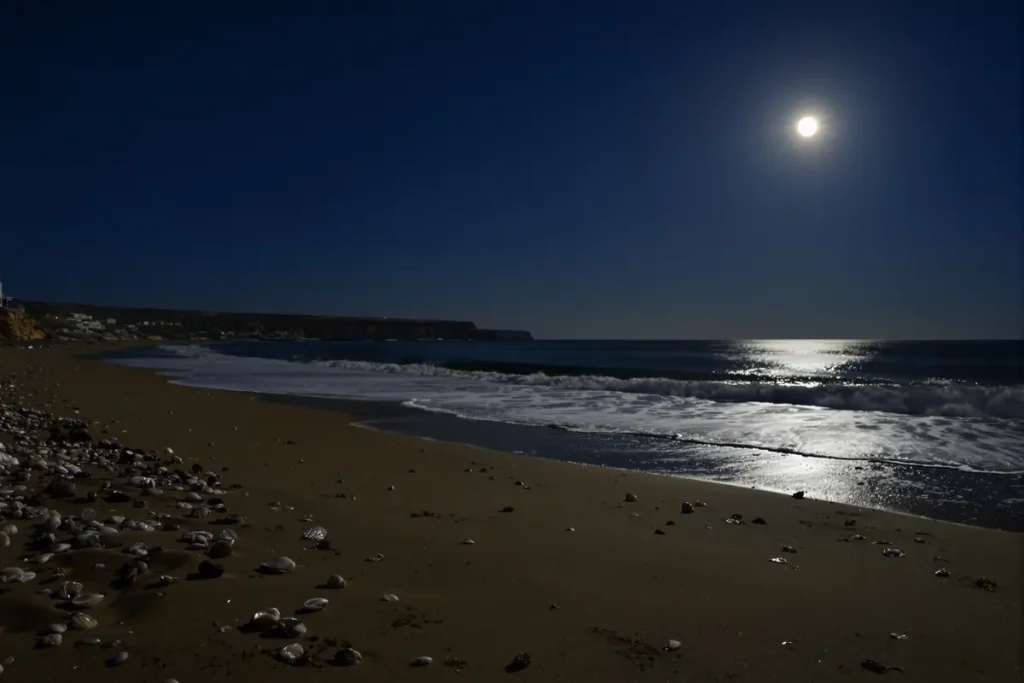
Every night, the Moon seems as peaceful and reliable as ever. But behind its quiet glow is a slow-motion story that’s quietly reshaping life on Earth. It’s not just space fanatics who should care—this celestial drift is subtly changing how we measure days, how tides behave, and how our planet’s future unfolds.
The Moon is drifting away—yes, really
It might sound surprising, but the Moon doesn’t stay in the same place. Each year, it moves about 3.8 centimeters farther from Earth. That’s about the speed your fingernails grow. This slow movement might seem too small to matter, but over millions of years, it adds up—and it has big effects.
Why is the Moon drifting? The answer lies in the tides.
Tides are the engine behind the Moon’s escape
The Moon’s gravity pulls on Earth’s oceans, causing two tidal bulges—one facing the Moon, and one on the opposite side of the planet. But because Earth rotates faster than the Moon orbits, those bulges get dragged slightly ahead of the Moon’s position.
That offset creates a gentle but consistent pull forward on the Moon. Over time, this nudges the Moon into a higher orbit, farther from Earth. Meanwhile, Earth’s rotation slows down just a bit in response. The trade? We lose tiny portions of our day as the Moon gains distance.
Fossils tell the story of ancient, shorter days
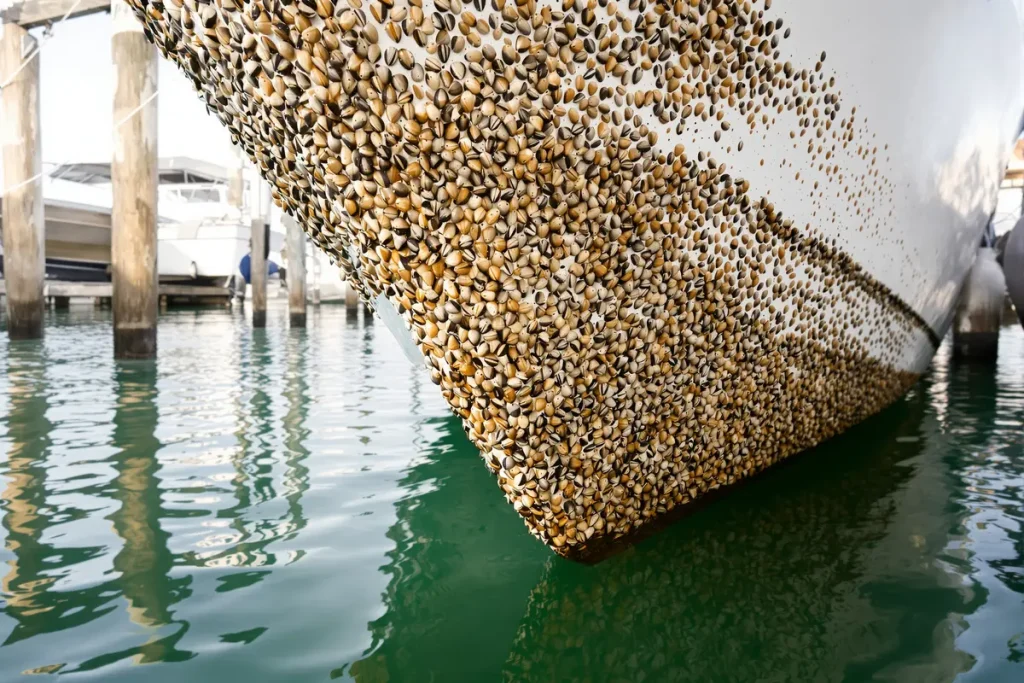
Want proof this has been going on for a very long time? Just look at the fossils. Scientists have studied ancient clamshells that grew in daily layers, much like tree rings. These growth lines offer a snapshot of how many days existed in a single year millions of years ago.
One remarkable study from 2020 found that during the late Cretaceous period—roughly 70 million years ago—Earth experienced about 372 days a year. That means each day was shorter, around 23.5 hours long.
Go back even farther, and the changes are even more dramatic. When the Moon first formed (about 4.5 billion years ago after a massive collision), Earth spun much faster. A day might have lasted only 6 to 12 hours!
How we know the Moon is moving
This isn’t just theory. The proof is real—and it comes from the Moon itself. During NASA’s Apollo missions, astronauts placed mirrors called retroreflectors on the Moon’s surface. Earth-based scientists now shoot laser beams at these mirrors and measure how long it takes the light to return.
The result? We can measure the Moon’s distance with millimeter-level precision. Over decades, this has clearly shown: The Moon is slowly creeping away.
So, what does this mean for Earth?
You probably won’t notice anything different in your lifetime. Right now, days only lengthen by a few milliseconds every century. But over millions of years, it adds up.
As Earth spins more slowly, our days become longer. Tides also weaken, as the Moon’s pull grows weaker with distance. Coastal areas will see smaller differences between high and low tides. This could shift marine ecosystems and even affect how nutrients move through the oceans.
Will we ever stop spinning?
One far-off possibility is called tidal locking. That’s when the same side of Earth would always face the Moon—just like how the Moon always shows us the same face. In that case, Earth would rotate just once every 27 days or so.
If that happened, Earth would have permanent tidal bulges. Areas facing the Moon would constantly have high tides, while others might hardly ever see them at all. But don’t worry—this scenario is extremely unlikely. Our planet will face much bigger changes long before it can reach that point.
Other signs of change: Eclipses won’t last forever
As the Moon moves away, it also appears slightly smaller in the sky. That means total solar eclipses won’t always be possible. One day, any eclipse we see will be “annular”—where a ring of the Sun shines around the Moon. Enjoy today’s total eclipses while you still can; they’re not a forever feature.
Earth’s past reveals clues about its future
Scientists study not just shells but also tidal patterns in ancient rock layers to understand how Earth’s rotation and climate have evolved. These clues help refine models to predict sea level changes, storm risks, and climate trends.
| Epoch | Approx. Day Length | Days per Year |
|---|---|---|
| Modern Earth | 24 hours | 365 days |
| Late Cretaceous | ~23.5 hours | ~372 days |
| Early Earth (theoretical) | ~6–12 hours | Many more days per year |
Our slow-motion story in the stars
You may never feel the shift, but it’s always happening above you. The Moon is quietly editing the length of our days and guiding the rhythm of our tides. It’s a reminder that even stable things—like coastlines or the solar eclipse—exist in a much bigger, ever-changing picture.
So the next time you walk along the beach or watch the Moon rise, remember this: Earth’s story is still evolving. Bit by bit, the sky is rewriting our planet’s future.