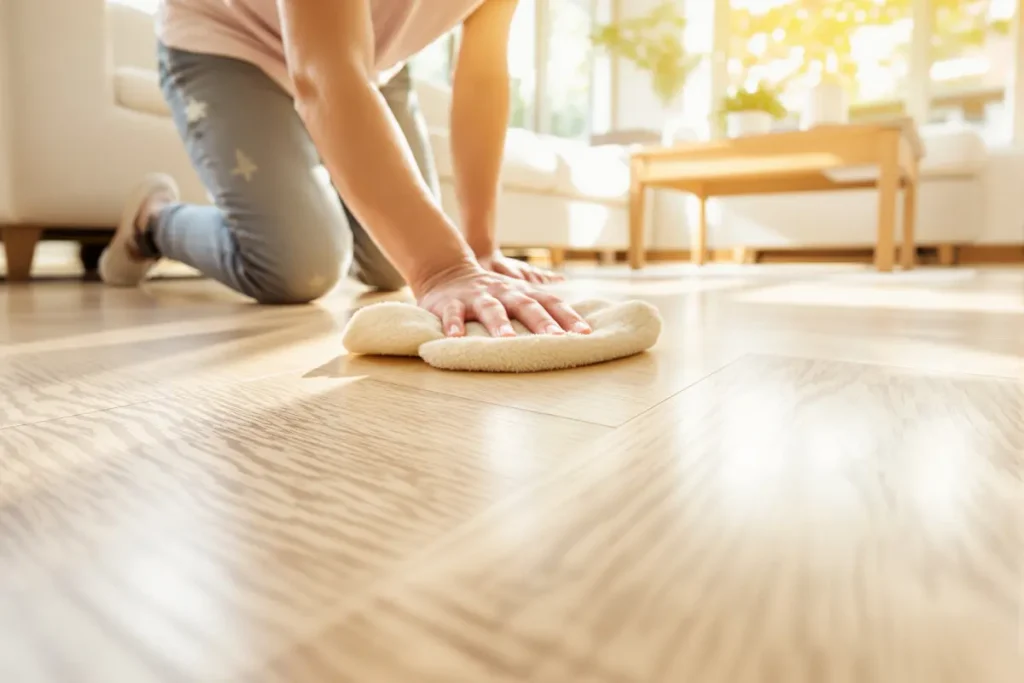
Your hardwood floors don’t need vinegar, wax, or wishful thinking—they need a smarter, gentler approach. If your floors look tired even after cleaning, there’s a simple technique that brings back that warm, natural glow without harsh products or expensive treatments. And the best part? You can start today.
Why your hardwood floors still look dull after cleaning
You mop, you wipe, maybe you even try vinegar like Grandma used to—but the shine never quite shows up. Why? It’s all about buildup, wear, and the light.
Every step, pet, and piece of furniture leaves behind small scratches. Add in water spots from plants or cloudy streaks from everyday wear, and suddenly your floors look “clean but dull.” Morning sunlight makes things worse, highlighting every smudge and imperfection.
Why vinegar and wax aren’t working
Vinegar might seem like a natural fix, but over time, its acidity damages the finish on hardwood. That gentle clean leaves behind a not-so-gentle dullness.
Wax? It wears unevenly and builds up in corners, creating a filmy layer that traps dirt. Instead of bringing out the shine, it hides the wood under a foggy surface. That “miracle” sheen vanishes within days and leaves your floor looking worse with every use.
The surprisingly simple solution: microfiber, neutral cleaner, and buffing
You don’t need new products—you need a smarter method. The magic lies in three words: clean, neutral, buff.
- Step 1: Dry dust with microfiber — Use a flat microfiber dust mop. Gently glide it along the wood grain to pick up fine grit that scratches without you noticing.
- Step 2: Lightly mop with a pH-neutral hardwood cleaner — Dilute slightly in warm water. Dampen another microfiber cloth, wring it out almost dry, and mop in small areas. The floor should dry in under two minutes.
- Step 3: Buff with a clean, dry microfiber cloth — Hand-buff just after each section dries. Use small circles or smooth strokes along the grain. This brings out the natural glow of the finish.
More work than tossing vinegar in a bucket? Maybe. But once you try it, the rhythm feels calming. Think of it as maintenance, not a chore.
How to avoid common mistakes
Avoid these traps if you want your floors to truly shine:
- Too much water — A soaked mop can warp the wood and leave the finish cloudy. Always wring until barely damp.
- Wrong cleaning products — Avoid multi-surface sprays, dish soap, vinegar, and “2-in-1” cleaners. These often leave behind filmy residue.
- Skipping the buff — This final step pulls everything together. Light hand-buffing helps the finish reflect light evenly and truly makes the floor look new again.
A simple schedule to keep your floors glowing
- Weekly: Quick dry microfiber dust mop along high-traffic areas.
- Every 2–3 weeks: Neutral cleaner with lightly damp microfiber, one room at a time.
- Monthly: Extra buffing where the light hits hardest—by windows, doorways, or open floors.
Skip the steam mops, ditch the vinegar, and keep wax off your list. Let the wood breathe, not suffocate.
What kind of shine are we going for?
We’re not aiming for a plastic gloss like a bowling alley. This technique brings out a clean, healthy shine—a soft glow that moves with the grain of the wood.
Your space feels warmer, more alive. You notice it most in the quiet moments, like catching light hitting the floor just right at sunset. That’s when you know it’s working.
When you need more than a clean: fixing scratches and damage
This cleaning method helps revive tired wood, but it won’t fix deep scratches or gouges. For that, you’ll need professional repair. Still, most floors don’t need sanding. They just need gentler care and the right technique.
Pro insights
Flooring experts agree:
“The biggest difference we see isn’t from fancy products,” says a seasoned installer. “It’s when people start using neutral cleaners and actually buff the floors properly. That alone can make 10-year-old floors shine again.”
Frequently Asked Questions
Can I ever use vinegar on hardwood floors?
You can, but it’s risky. Even diluted vinegar will slowly weaken the finish and dull the shine. It’s safer to use a pH-neutral hardwood cleaner.
What type of microfiber mop should I use?
Choose a low-profile microfiber mop with removable, machine-washable pads. Avoid anything abrasive or too fluffy.
How often should I buff my floors?
Every 2–3 weeks is ideal for busy areas. A little extra buffing once a month in bright spots can make all the difference.
Will this method fix deep scratches?
No. It’s meant to improve surface appearance and revive the finish. For deeper damage, consult a flooring professional.
Does this work on all wood floors?
It’s great for most sealed and finished hardwood floors. For oiled or waxed types, check care instructions. But the core method—microfiber, minimal moisture, and buffing—still applies.
Let your floors shine again
You don’t need to sand, refinish, or spend a fortune. With one thoughtful change—trading vinegar and wax for a microfiber method—you can restore the glow and pride of your hardwood floors.
It’s simple, affordable, and ready whenever you are. And the next time you walk barefoot across the room, you might just stop to smile at your reflection in the grain.