Sticky fried eggs can turn breakfast into a battle. But what if you could ditch the butter, skip the cleanup, and still flip a perfect egg? There’s a new kitchen trick making waves, and all it takes is a bit of plain flour. Sounds strange? Wait until you try it.
What’s the flour trick and why is it catching on?
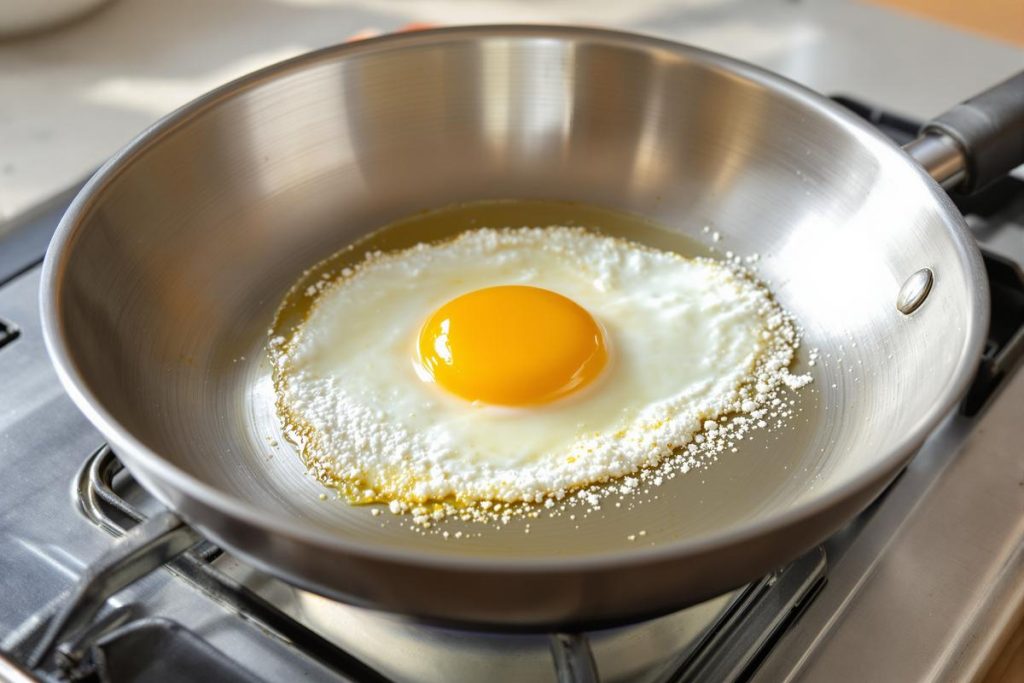
Instead of oiling your pan the usual way, this surprising method starts with a dusting of dry flour. You then add a small amount of neutral oil and heat it up before cracking in your egg. The result? A fried egg that slides off the pan—no sticking, no burnt bits, no mess.
It’s gaining buzz online, especially with people using stainless steel pans, where fried eggs often glue themselves down. Even non-stick pans benefit, since the flour adds an extra buffer and helps those coatings last longer.
How to fry eggs with the flour method
This hack may sound unconventional, but it’s refreshingly simple. Here’s a quick step-by-step to get you started:
- Heat a clean, dry pan on medium.
- Sprinkle a thin, even layer of wheat flour—just enough to lightly coat the base.
- Add about 1 teaspoon of neutral oil (like sunflower or canola).
- Let the flour turn a light golden color and the oil shimmer—but don’t let it burn.
- Crack your egg over the hot flour-oil layer.
- Lower the heat if needed, and cook to your preferred consistency.
- Use a thin spatula to slide the egg out—it should lift easily!
Pro tip: Use a light touch with the flour. Too much, and it can give the egg a burnt or bitter flavor. Too little, and the egg may still stick in places.
Why flour works: the kitchen science explained
Here’s the secret: when you heat flour in oil, it toasts slightly and forms a soft crust. That toasted layer acts like a buffer between the hot metal pan and your delicate egg. Instead of the egg’s proteins bonding with the pan, they rest on this flour-oil base—which means less sticking and tearing.
In fact, food scientists confirm that egg whites stick to cool, dry metal surfaces. While oil helps prevent this, it’s not perfect—hot spots in the pan can still cause trouble. The flour evens things out and keeps the egg separate from harsh contact.
How does it taste—and compare to other methods?
| Method | Fat used | Texture | Sticking risk |
|---|---|---|---|
| Butter only | Medium to high | Rich, browned edges | Medium |
| Oil and water (steam) | Low to medium | Softer, steamed top | Low to medium |
| Flour with oil | Low | Toasted base, neat edges | Low (when heat is right) |
The taste? Slightly different—but pleasantly so. Many cooks describe the bottom of the egg as taking on a lightly nutty flavor, much like a thin pancake. The yolk holds onto its familiar richness, with a firmer white where it touches the flour.
Be careful: when the flour trick can backfire
As clever as it is, this method isn’t a shortcut to sloppy cooking. You still need to watch your heat. If things get too hot, the flour burns fast, leaving behind dark bits and an unpleasant smell. On the flip side, if the heat is too low, the flour clumps up and turns gummy.
And for those avoiding gluten, traditional wheat flour isn’t ideal. Luckily, you can swap in rice flour, which toasts well and stays neutral in taste. Avoid cornstarch, though—it tends to clump and taste chalky unless fully cooked.
Is this method healthier?
Compared to using butter, yes—especially if you care about saturated fat. Many use neutral oils rich in unsaturated fats, which align better with heart-healthy diets. You still consume some fat, of course, but it shifts the nutritional profile slightly toward better choices.
Eggs themselves remain a rich source of protein and cholesterol, so this trick won’t turn them into a “light” food. But for everyday meals, it offers a cleaner way to fry without the grease.
Why people are loving this trick right now
With rising prices and damaged non-stick pans, this tip couldn’t come at a better time. Flour is cheap. Your old steel pans are already in the cupboard. And best of all, you skip the grime and fuss of frying with butter or heavy oil.
There’s also a growing preference to avoid synthetic non-stick coatings—some of which come with environmental questions. For many home cooks, this flour method feels refreshingly low-tech yet totally effective.
Tweaking the method: what to try next
Want the best results? Try these tips:
- Start small—use ½ teaspoon of flour and a teaspoon of oil in a mid-size pan.
- Keep the flour layer even and very thin.
- Test heat control with one egg before making four at once.
Different pans cook differently. Lightweight aluminum heats fast and burns easily. Cast iron holds heat better and gives a more forgiving crust under the egg.
Beyond eggs: can you use the flour trick elsewhere?
Absolutely. This method isn’t just for breakfast. Some clever cooks say a dusting of flour works when reheating leftover rice or crisping up hash browns. Others use it like a reverse dredging—flouring the pan itself to prevent sticking when making fish or thin pancakes.
Cleaning up and long-term use
One downside? Toasted flour can leave ghost marks in your pan. To avoid buildup, rinse while the pan’s still warm and use hot water with a gentle sponge. Avoid letting burned flour sit—scrubbing it off later is a pain.
Some people love the nutty note flour adds. Others miss the richness of butter. Try it a few times and decide what suits your routine.
Final thoughts: simple fix, surprising results
Sometimes, solving a kitchen problem doesn’t need a fancy gadget—just a sprinkle of flour and a little curiosity. This fried egg method is one of those rare tricks that actually improves your cooking, teaches better heat control, and just might change how you think about eggs.
Give it a shot. Your pan, and your breakfast routine, might thank you.